
This is how AI gets things wrong, and why it sounds so sure
It will invent a plausible answer rather than say "I don’t know," and it will do it in the same confident voice. Here’s the shape of the failure and how to live with it.
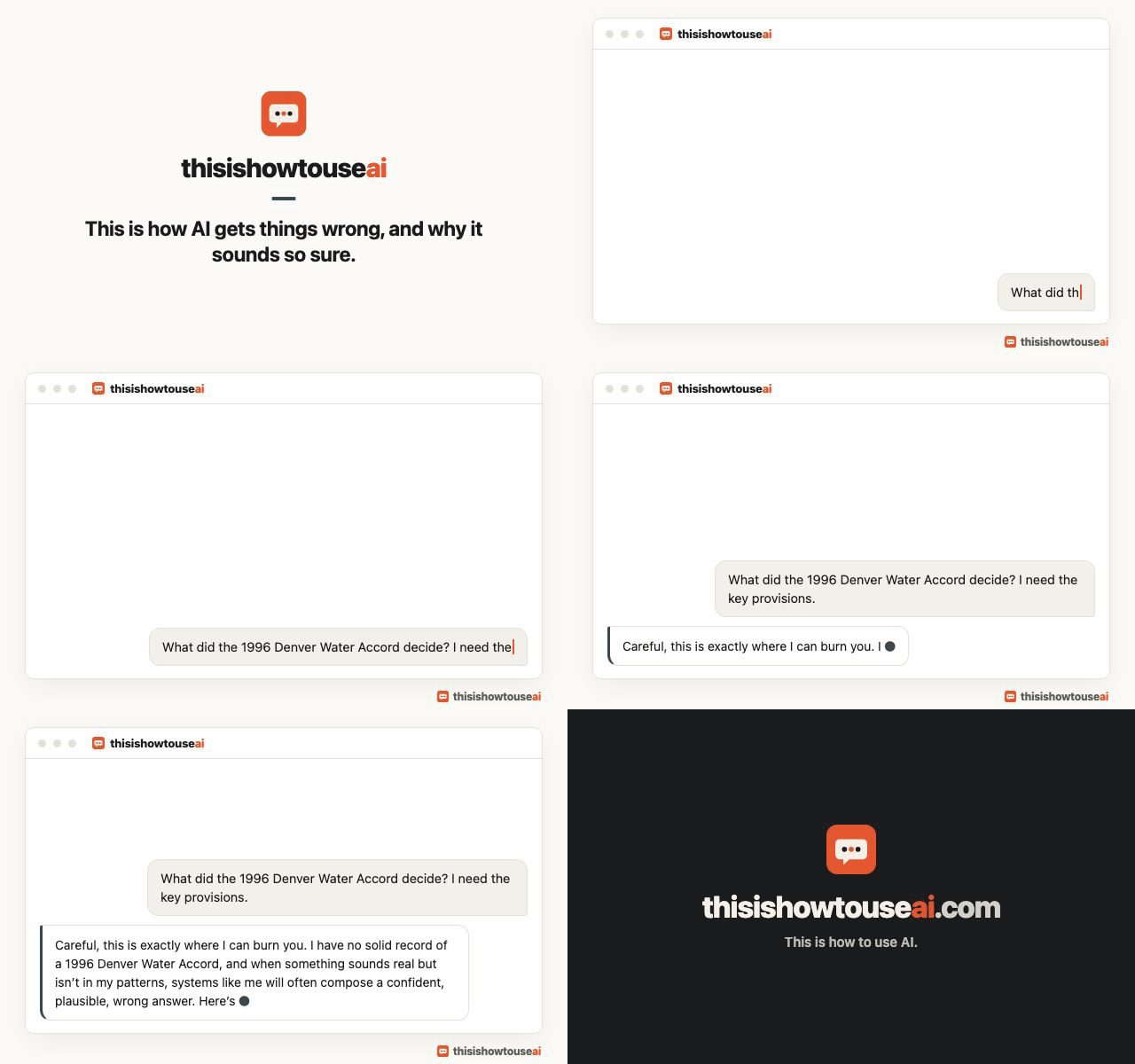
This is how AI gets things wrong, and why it sounds so sure while doing it.
Ask an AI about a treaty that doesn’t exist, phrased as if it does, and there’s a real chance you get back a fluent little summary: parties, provisions, historical significance. Not because it wants to deceive you. Because its entire job is producing the most plausible continuation, and a plausible-sounding summary is more statistically likely than "that doesn’t exist."
The industry calls this hallucination. You can call it what it feels like: a well-read friend who would rather improvise than admit they don’t know.
Where it strikes
Risk rises around specific, obscure, or current facts: names, dates, statistics, citations, prices, and the contents of material it cannot access. Giving it the actual document, photo, or numbers makes the answer more grounded, but it can still misread them. Structure such as what to compare or which questions to ask is often more useful than an unsupported factual verdict.
That is why this site focuses on grounded moments. Give it a manufacturer’s public warranty page and ask it to quote the exact term for your model. Do not ask for a generic warranty rule and treat the uncited answer as authority.
The three-question test
Before acting on any AI answer, run these:
- Is this a fact I could check, or a way of thinking? Ways of thinking (checklists, comparisons, questions to ask) are its safe zone. Checkable facts get checked.
- What happens if this is wrong? Wrong wording for a casual invitation costs little. Wrong medication information can cause harm. Stakes set the verification effort.
- Did it get this from me, a source I can open, or nowhere visible? Grounding helps, but compare its reading with the photo, document, or source before relying on it.
A check that actually counts
Asking "are you sure?" does not verify anything, and a citation is not proof until you open it. Pull out the one claim your decision depends on, name the source that owns it, and compare the exact wording. If AI says a laptop has a two-year battery warranty, open the manufacturer warranty for that exact model. If it says a museum is open late, check the museum’s current hours. If it reads an appliance code, compare the symbol and owner action with the exact model’s manual.
You can still tell AI to mark uncertainty and separate claims from suggestions. Use that to build your check list, not as a substitute for the check. When there is no trustworthy source and being wrong matters, do not make the claim load-bearing.
What you cannot do is trust tone. The sureness is part of the writing style, not a measure of evidence.
None of this is a reason to skip the tool; it’s the manual for the tool. A car that needs its mirrors checked is still a car.
- Share only: Public, ordinary, or hypothetical material when learning the failure pattern; do not use a private document as a demonstration.
- Verify: The single claim your decision depends on by opening the primary document, current official source, exact label, or responsible professional and comparing it directly.
This is how to use AI.