
This is how to use AI to learn a practical skill in 30 days, part 1: build the practice loop
Stop collecting resources and build a short loop: observable finish line, baseline, practice, feedback, and the next small adjustment.
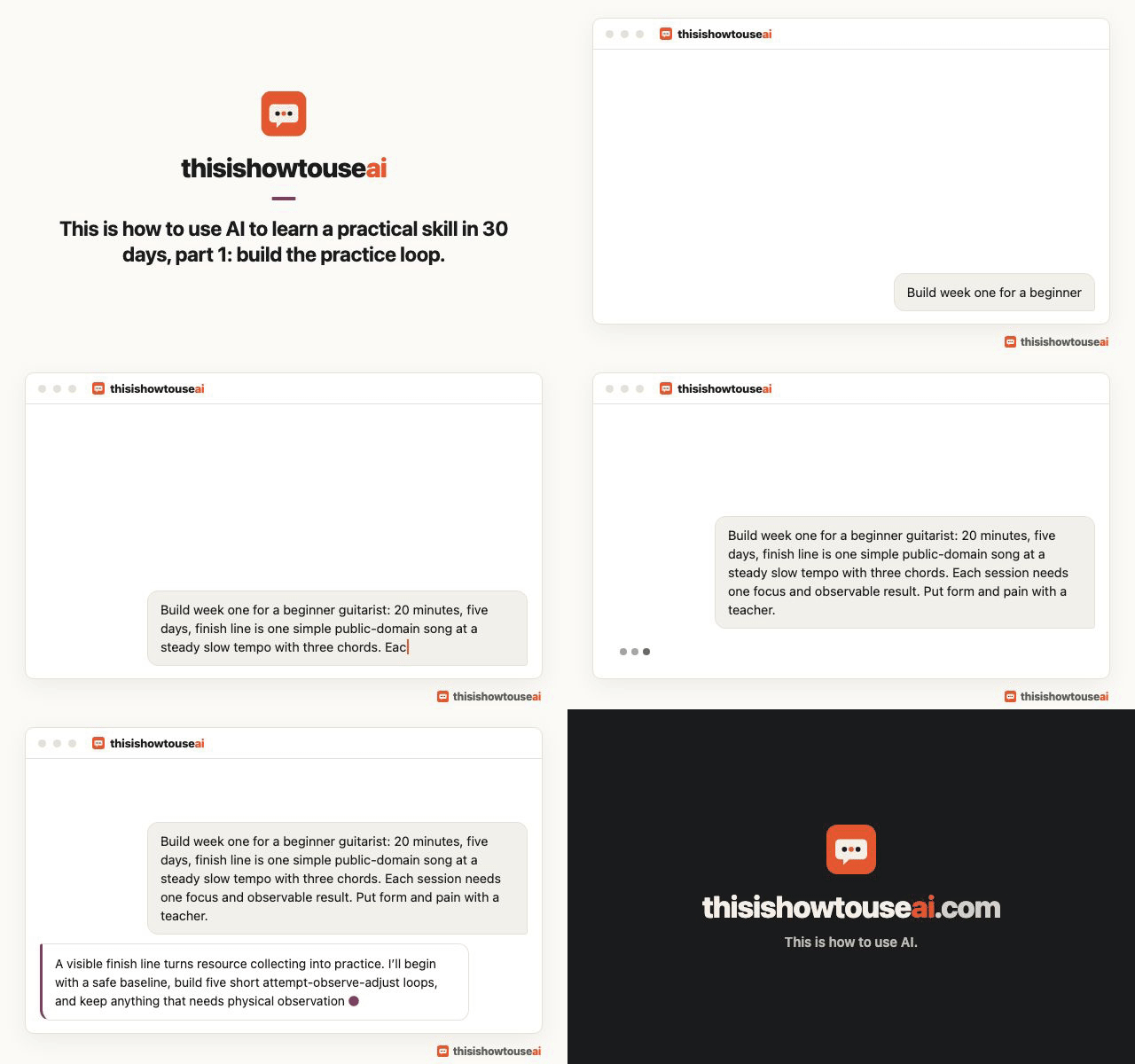
This is how to use AI to learn a practical skill in 30 days, part 1: build the practice loop.
A month of collecting guitar videos can feel productive while your fingers still cannot move cleanly between two chords. A practical skill grows through attempts you can observe, feedback you can understand, and a next session shaped by what actually happened.
Define a finish line you can see
The practice-loop prompt:
Help me build a 30-day beginner-guitar practice loop. My finish line is to play one simple public-domain song from start to finish at a steady slow tempo, using three basic chords. I can practice 20 minutes on five days each week. I own an acoustic guitar and tuner and have never worked with a teacher.
Start with a safe baseline check and a first week only. Each session needs one focus, one observable result, and one short note to record. Do not diagnose physical pain or give advanced technique. Mark anything about posture, hand position, pain, or instrument setup for a qualified teacher to observe.
Swap in your own skill, finish line, and schedule. The observable loop is the part that matters.
Level up the ask:
Rewrite my learning prompt so every session produces evidence, the finish line remains realistic, and unsafe or unobservable technique moves to a qualified teacher. Tell me what you changed and why, then answer the improved version.
Keep the loop short
- Attempt: do the smallest version of the skill without warming up through endless explanation.
- Observe: record one fact, such as clean chord changes out of ten or whether the tempo stayed steady.
- Adjust: choose one change for the next attempt.
- Repeat: stop while the note is still clear enough to shape tomorrow.
Use AI for planning, reflection, and explaining concepts at the right level. Use a qualified teacher for physical form, pain, safety, and anything the chat cannot observe reliably.
End the week with evidence
Your week-one handoff should be tiny: sessions completed, one measurement that improved, one recurring difficulty, one question for a teacher or source, and the next practice focus. That evidence becomes part 2. Completion is not mastery; it is information for better practice.
- Share only: The skill, current level, available time, ordinary equipment, and harmless constraints; leave out school records, private feedback, and injury or health details.
- Verify: Technique, safety, equipment use, and physical form through authoritative instruction and a qualified teacher who can observe you when the skill requires it.
This is how to use AI.