
This is how to use AI to learn anything like you have a private tutor
The reason school felt hard wasn’t you; it was the pace. Here’s how to make AI teach at exactly your speed, starting from what you already know.
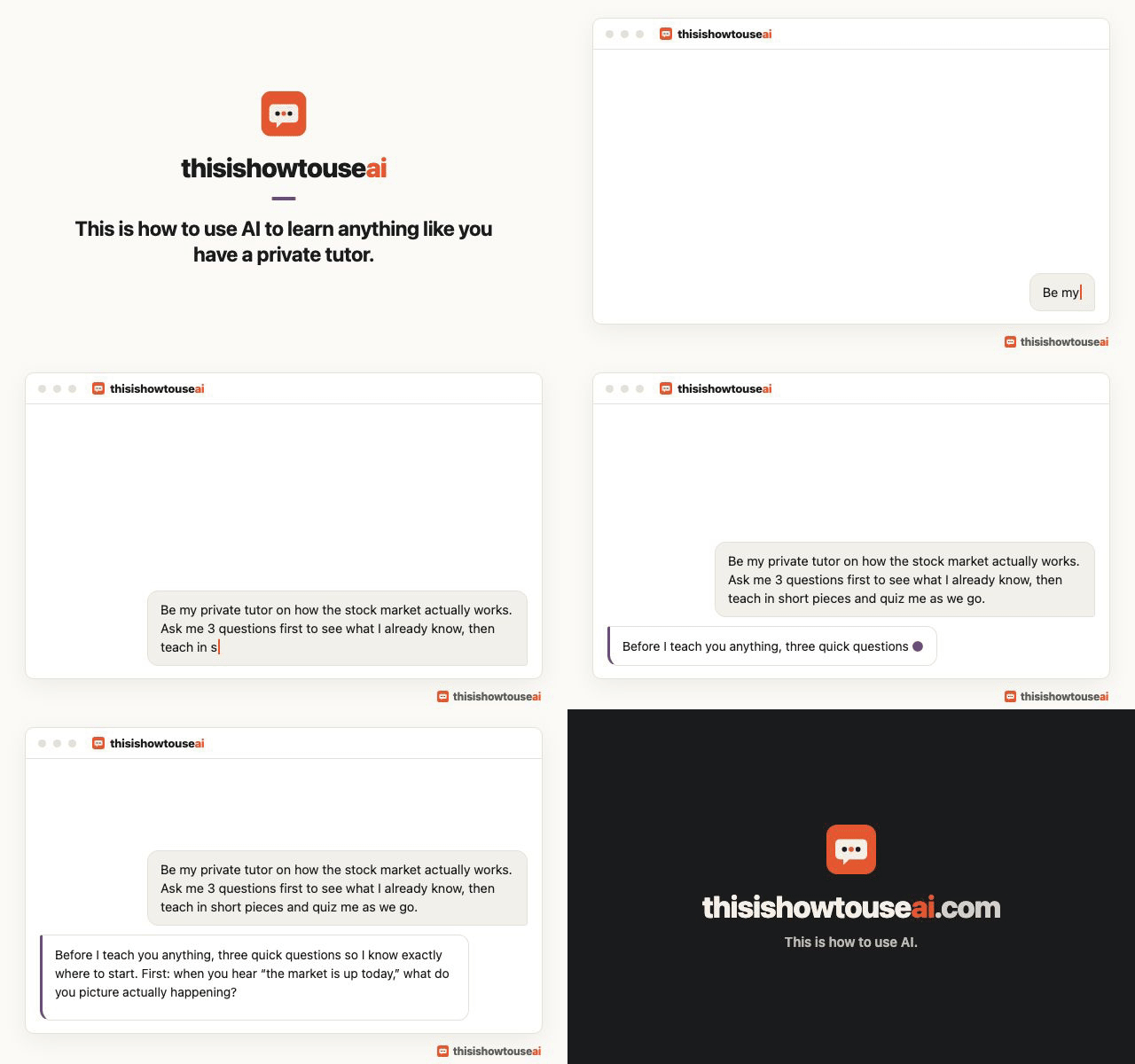
This is how to use AI to learn anything like you have a private tutor.
Here’s the thing nobody says about learning as an adult: the material was never the hard part. The pace was. Classes move at the speed of thirty people. Videos move at the speed of whoever made them. Books can’t hear you say “wait, go back.”
A tutor fixes this by doing one thing: adjusting to you in real time. A chatbot can imitate that adjustment if you make it ask, listen, and check your understanding.
The move
Don’t ask AI to “explain” a topic. An explanation is a lecture; you’ll nod along and retain nothing. Ask it to tutor, which means it has to find out where you are first:
Copy this prompt:
I want to actually understand how the stock market works. Act as my private tutor:
1. Start by asking me 3 questions to find out what I already know and where my mental model is wrong.
2. Teach in short pieces: a few paragraphs, then check my understanding with a question before moving on.
3. I manage a restaurant, so connect new ideas to inventory, pricing, and busy versus slow nights when those analogies genuinely fit.
4. When I get something wrong, don’t just correct me; show me why my version was tempting but breaks.
5. Mark any factual claim I should verify in a textbook, official source, or current reference.
Start with your 3 questions.
Swap the details for your own situation. The structure is the part that matters.
Level up the ask:
One more move before you send it. Ask this first:
Rewrite my prompt above into a version that will get me a better result. Tell me what you changed and why, then answer the improved version.
Why each piece matters
- The 3 questions first: this is the whole trick. It stops the AI from starting at either “what is money” or graduate school.
- Short pieces with checks: being asked to answer helps reveal whether the idea actually stuck. Reading can feel clearer than it is.
- Your analogies: a bartender learns market liquidity faster through bar inventory than through textbook definitions. Connecting new to known isn’t a gimmick; it’s how memory works.
- Autopsy of wrong answers: a good tutor treats your mistake as data about your mental model. So does this prompt.
The habit that compounds
Keep one ongoing chat per subject and come back to it. Ask it to quiz you on earlier material before starting new ground. Ask the same question a different way when it does not click, and verify the load-bearing facts in a textbook, official reference, or trusted source outside the chat.
The quiet payoff: the topics you’ve been “meaning to understand” for a decade (the market, how mortgages price, what your kid’s biology homework means) stop being someday things.
- Share only: The topic, what you already understand, a harmless analogy, and public or permitted source material; no school, workplace, account, or confidential records are needed.
- Verify: The facts that carry the lesson in a current textbook, primary source, official reference, or instructor-approved material.
This is how to use AI.