
This is how to make AI ask you the questions
You don’t know what context matters. It does. Flip the interview and watch the real problem surface. Skill three.
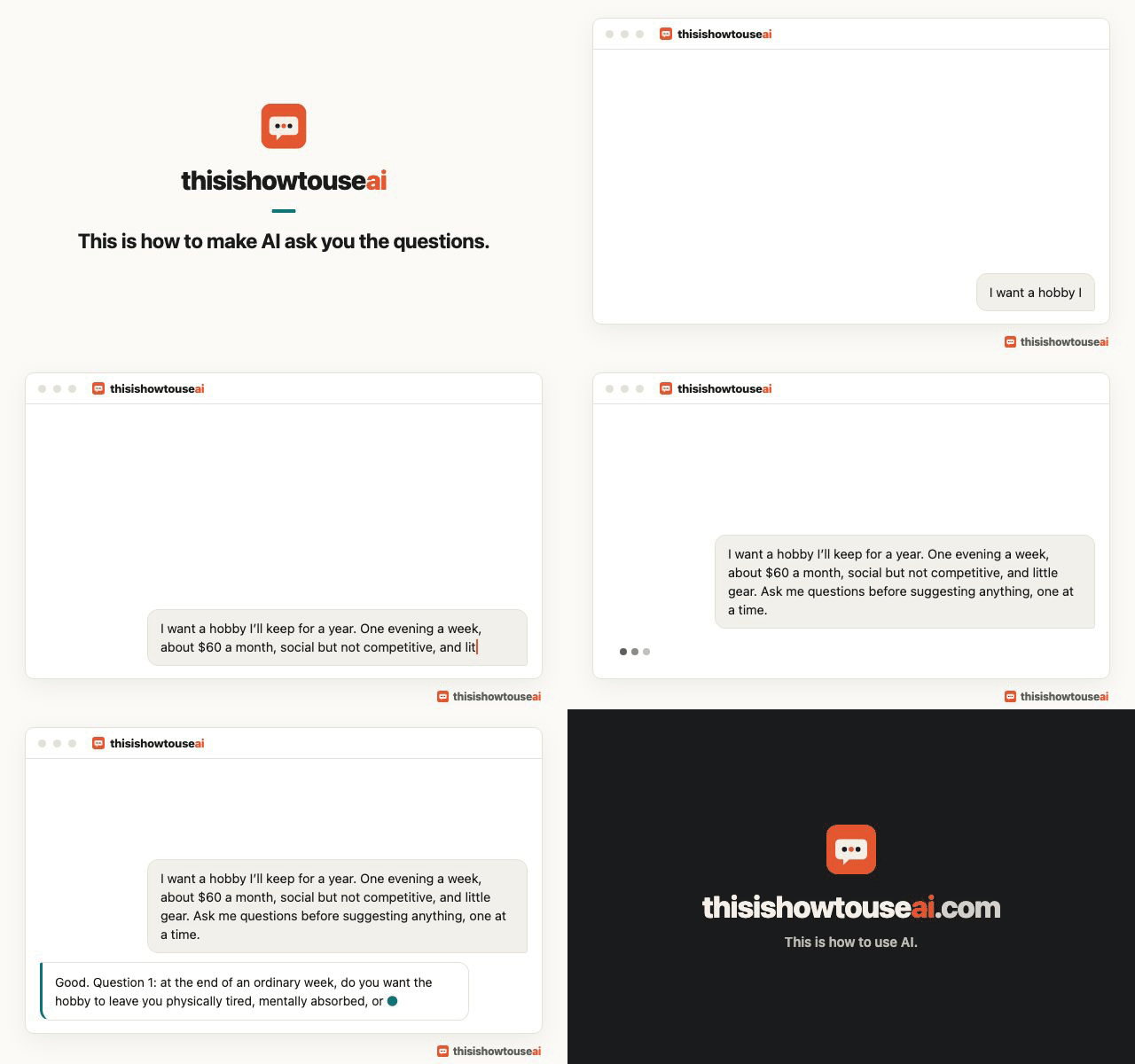
This is how to make AI ask you the questions.
Context is the whole game, but you do not always know which context matters. You know your life, but not which details change this answer. AI can propose the questions instead, and there is a five-word sentence that unlocks it:
The five words:
Ask me questions before answering.
It flips the interview. Instead of you guessing what to volunteer, the AI proposes questions that may distinguish your situation.
Watch the flip on choosing a hobby
The reader knows the goal but not which preferences will change the answer. Broad time, budget, energy, and social preferences are enough; names, schedules, addresses, and account details are not.
The ask:
I want a hobby I’ll actually keep for a year. I can give it one evening a week and about $60 a month. I want to meet people, but I dislike competition and I know I will quit if it requires lots of gear. Ask me questions before suggesting anything, one at a time.
Its first question:
Question 1: At the end of an ordinary week, do you want the hobby to leave you physically tired, mentally absorbed, or socially energized?
Notice what that question tries to uncover: not a list of popular hobbies, but the kind of energy the activity should return. A useful interview can ask whether you prefer making, moving, learning, or gathering; how far you will realistically travel; and whether missing a week would make the hobby hard to resume. You decide which questions matter and which do not.
Where the flip earns its keep
- Anything with a hidden variable: choosing a hobby, planning a weekend, comparing ordinary products, or organizing a room. If a knowledgeable friend would ask a surprising question, let AI propose its version.
- Anything you’re too close to: a project you keep overcomplicating or a purchase where every option has started to look the same. Questions can reveal the preference you stopped noticing.
- Anything where you’d write a biased brief: asked to summarize the choice yourself, you may unconsciously write the version where your favorite wins. Its questions can challenge that framing.
How to run it well
- Add "one at a time", or it dumps eight questions and you answer none of them properly.
- Add "tell me when you have enough", which stops the interview from running forever.
- Answer honestly or don’t bother. The questions only work on true inputs. It has no way to catch you flattering yourself, which leads to the limit below.
The honest limit
The flip makes AI better at gathering context. It does not make it a therapist, accountant, or licensed professional. On high-stakes topics its questions prepare you for the human conversation. Stop before sharing names, account numbers, passwords, health record identifiers, private messages, confidential work data, or anything the task can solve without.
The habit
End a big ask with "ask me questions before answering, one at a time." Notice whether a question surfaces a useful detail you would not have volunteered, and ignore the questions that do not fit.
- Share only: Broad, non-sensitive facts you are comfortable exploring; stop the interview before it asks for identity, accounts, health records, private messages, or confidential work data.
- Verify: Any conclusion affecting money, health, legal rights, employment, or safety against your real records and with the accountable human professional.
This is how to use AI.