
This is how to never accept AI’s first draft
The first answer is often the broadest one. The value appears when you correct its assumptions and ask for pushback.
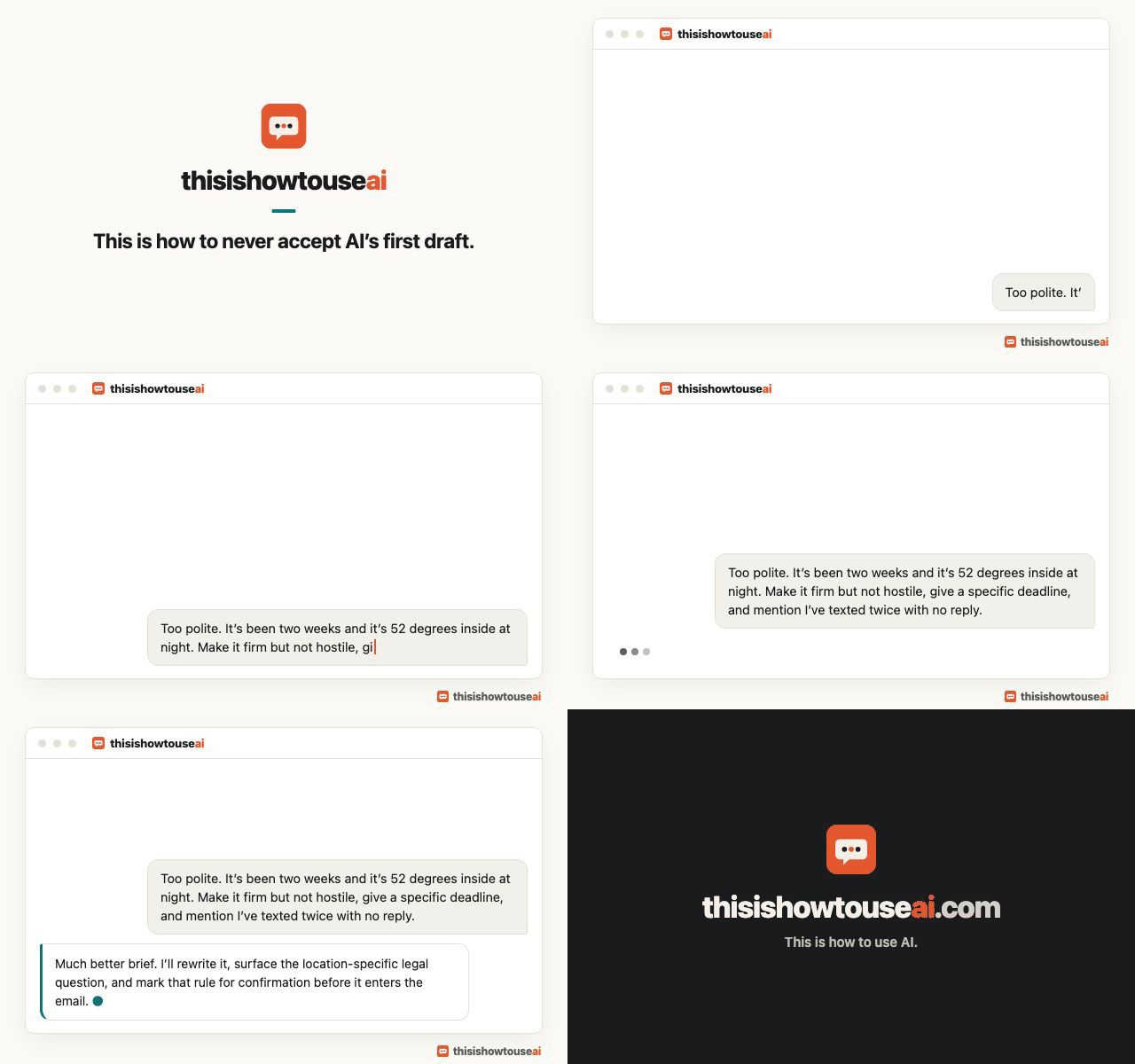
This is how to never accept AI’s first draft.
The first answer often defaults to a broad, conventional response, especially when the ask leaves room for assumptions. That can be fine for a rough packing list. When the thing matters, the fix is to correct what it assumed and stay for another turn.
Most people use AI like a vending machine: one coin, one snack, walk away. It’s a conversation partner. The entire skill is staying at the table for two more turns.
Watch an email improve
The situation: asking a landlord to fix a heater that’s been broken for two weeks. Type your own short summary of the issue and desired outcome; do not paste a private message thread, lease, or account record. Turn one:
Turn 1, the ask:
Write an email to my landlord about the heater that’s been broken for two weeks.
Turn 1, the draft:
Dear Jordan, I hope this finds you well. I’m writing to follow up regarding the heating unit, which has unfortunately been non-operational for approximately two weeks. I would greatly appreciate it if this could be addressed at your earliest convenience...
Grammatical. Spineless. It sounds like nobody, because it’s the average of everybody. Now the moves:
Turn 2, push back:
Too polite. It’s been two weeks and it’s 52 degrees inside at night. I want firm but not hostile, I want a specific deadline, and mention that I’ve texted twice with no reply.
Turn 3, make it check your blind spot:
What am I entitled to here that I didn’t ask about? Ask me where I live if that matters.
Turn three should surface the missing question: location matters because tenant rules vary. That does not make the chatbot a legal source. Use it to name the issue and draft a question, then confirm the actual rule with the lease, a current government or tenant-resource page, or a qualified local professional before putting a legal claim in the email.
The four follow-up moves
You don’t need many. These four cover most situations, and they work on anything, not just writing:
- "What would you push back on?" Forces it out of agreeable mode and into review mode. Works eerily well on its own output.
- "What did you assume?" First drafts are built on invisible guesses about your situation. Making the guesses visible lets you correct the two that are wrong.
- "Make it sound like me, not like a form letter." Give it two harmless sample sentences you wrote yourself. Do not paste an old email containing private or confidential details just to demonstrate your voice.
- "What am I not asking that I should be?" The blind-spot move. It can surface a possible legal rule, warranty clause, or question for a seller. Possible facts still get checked at the real source.
When to stop
Iteration has a failure mode: polishing a sentence nobody will read twice. Stop when a new turn changes style instead of substance, or when you are avoiding the real decision by asking for another version.
And a limit worth naming: iteration sharpens what is there; it does not fact-check it. A confidently wrong claim survives four rounds of polish. Before sending, check every sentence that depends on a law, price, deadline, policy, or other outside fact against its actual source.
The habit
For one week, never use the first draft of anything that matters. Ask "what would you push back on?" before you copy a single word. The gap between what you were about to send and what you send instead is this skill, made visible.
- Share only: The issue, desired tone, key facts, and deadline in your own summary; do not paste the original private correspondence or confidential document.
- Verify: Every law, price, deadline, policy, entitlement, citation, and other outside fact against the document or current primary source before sending.
This is how to use AI.