
This is how to use AI to build a seasonal home maintenance list
Replace the giant generic checklist with a short climate-aware list of observations, responsible sources, and service boundaries.
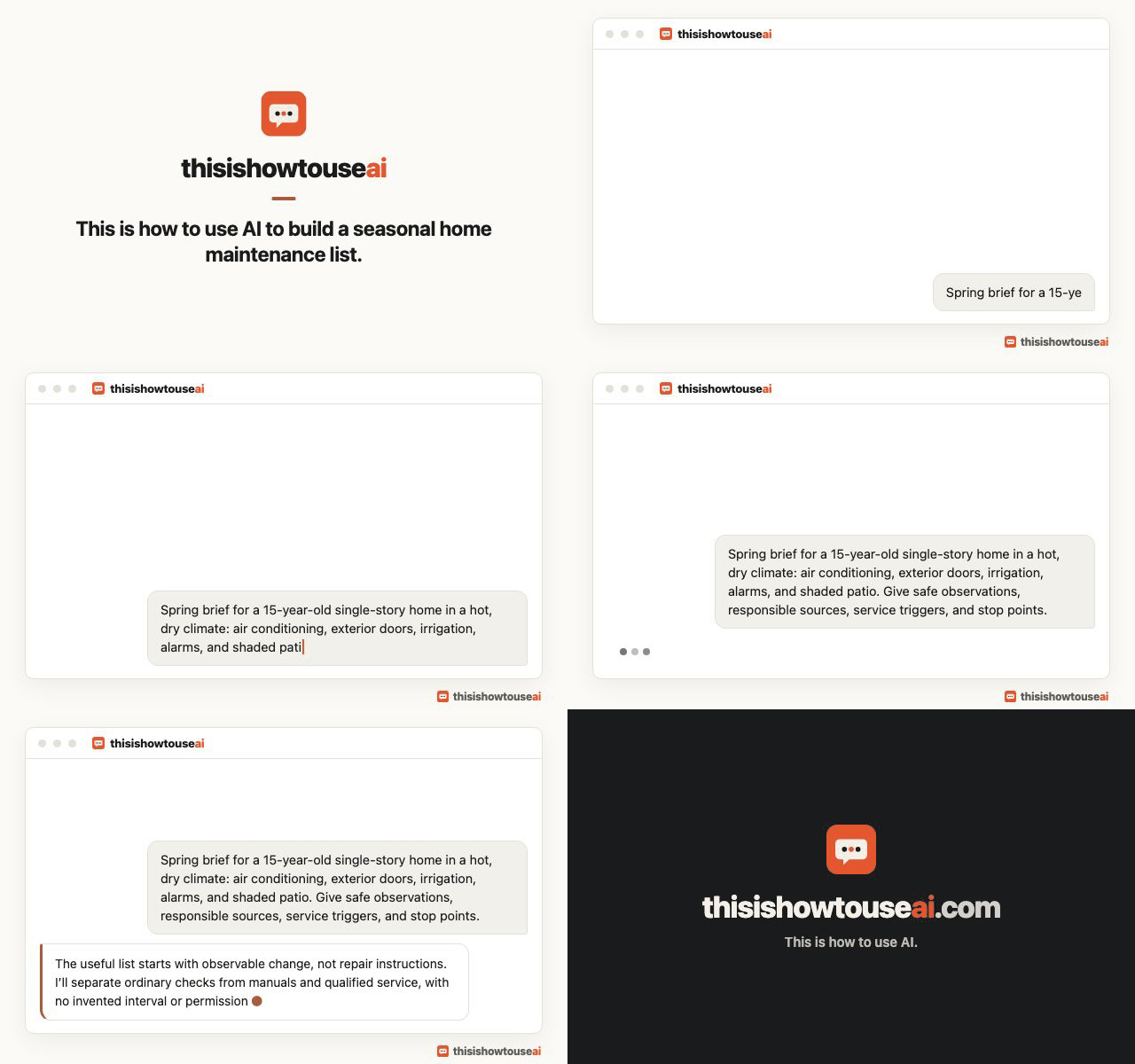
This is how to use AI to build a seasonal home maintenance list.
A generic spring checklist can tell every homeowner to inspect twenty things without explaining which ones matter in a dry climate, which are ordinary observations, and which require someone trained to work around electricity, gas, roofs, or moving equipment.
Give broad context only: climate, type of home, approximate age, and equipment categories. Ask AI to build a short observation list and attach every action claim to the source responsible for it. Do not provide an address, system serial number, or service documents.
The maintenance prompt:
Build a short spring maintenance brief for a fifteen-year-old single-story home in a hot, dry climate. Categories: central air conditioning, exterior doors, irrigation, smoke and carbon-monoxide alarms, and one shaded patio. I want ordinary observations first and qualified service clearly separated.
For each category, give what I can safely observe without opening equipment, the manual or local source to check, what change would trigger a service call, and what not to attempt. Do not invent service intervals.
Swap in broad climate and equipment categories. The observation-source-service boundary is the part that matters.
Level up the ask:
One more move before you send it. Ask this first:
Rewrite my prompt above into a version that will get me a better result. Tell me what you changed and why, then answer the improved version.
Turn the checklist into a triage map
A useful list begins with visible or audible changes, not repair instructions. It may ask whether a door seal is visibly damaged, whether an alarm is within the manufacturer’s replacement window, or whether irrigation is reaching the intended area. The next column names the manual, utility, authority, or trade that owns the answer.
- Observe: Use ordinary senses from a safe position and record only what changed.
- Source: Match each interval or procedure to a current manual or responsible local source.
- Escalate: Move roofs, panels, gas, wiring, refrigerant, structural issues, and uncertain hazards to qualified people.
Let the exact equipment override the generic list
Models, codes, climates, and service requirements differ. Verify the list against the actual manuals, local rules, and qualified service advice. Stop when safe access or the cause of a change is uncertain.
The result is a manageable seasonal scan with clear ownership, not a chatbot-generated permission slip to repair the house.
- Share only: Broad climate, home type, approximate age, and generic equipment categories; exclude addresses, security layout, serial numbers, service records, and wide home images.
- Verify: Intervals, procedures, safety boundaries, permits, and service requirements with manufacturer manuals, local authorities, utilities, and qualified trades.
This is how to use AI.