
This is how to use AI to build a week of breakfasts you will actually eat
Not aspirational smoothie bowls. Breakfasts that survive a 7:10 door time, a real budget, and the fact that you stop wanting eggs by Wednesday.
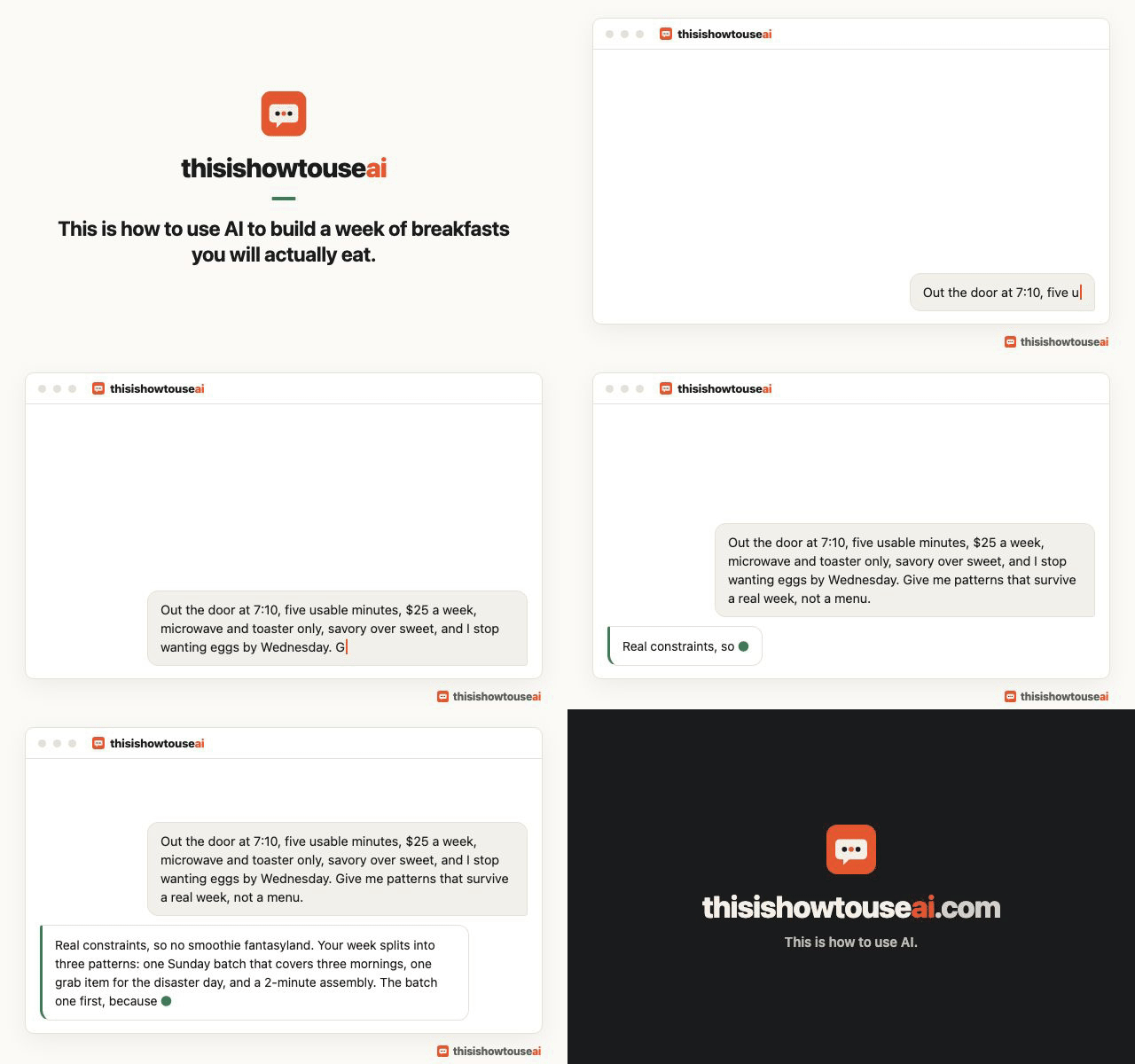
This is how to use AI to build a week of breakfasts you will actually eat.
Every breakfast plan on the internet was written for someone with twenty calm minutes and a blender. The actual constraint set looks more like: out the door at 7:10, five usable minutes, a budget, and a strong opinion about eggs that arrives around Wednesday. Plans fail on the constraints nobody wrote down, so write them down:
Copy this prompt:
Build me a realistic week of weekday breakfasts.
My actual constraints: I leave at 7:10 and can spend 5 minutes max in the morning. About $25 a week for breakfast groceries. I have a fridge, a microwave, and a toaster, no stove time before work. I like savory more than sweet, I’m sick of eggs by midweek, and anything I have to assemble from six containers will not survive past Tuesday.
Give me patterns, not a rigid day-by-day menu: which breakfasts can be made ahead on Sunday, which are grab-and-go purchases, and which are 2-minute assemblies. Then flag which ones reheat badly so I don’t find out on Thursday.
Swap the details for your own mornings. The structure is the part that matters.
Level up the ask:
One more move before you send it. Ask this first:
Rewrite my prompt above into a version that will get me a better result. Tell me what you changed and why, then answer the improved version.
What a useful answer looks like
Patterns, not recipes: a make-ahead batch that covers two or three mornings, a grab-item for the day everything goes wrong, and a couple of two-minute assemblies that use overlapping ingredients so the $25 stretches. The overlap is the trick a listicle never does for you; it is what turns seven breakfasts into one short shopping list instead of seven small ones.
Copy this prompt:
Consolidate that into one shopping list, grouped by store section, with rough total cost against my $25. If anything pushes me over, tell me what to swap, not just what to cut.
The honest edges
If anyone at your table has an allergy, the label on the actual package is the authority, every time, and a chat is not where diet plans for medical reasons come from. What AI is genuinely good at here is the logistics layer: patterns that fit your morning, ingredients that overlap, and the shopping list that follows, which is the part that decides whether week two happens at all.
- Share only: Your schedule, budget, kitchen access, and food likes and dislikes. Allergies and medical nutrition decisions stay with package labels and qualified professionals, not the chat.
- Verify: Ingredient and allergen facts on the actual package label; any medical, allergy, or diet-plan decision with a clinician or dietitian.
This is how to use AI.