
This is how to use AI to compare sunscreen labels
Two packages can make similar promises with different active ingredients and directions. Extract what the labels actually support before choosing.
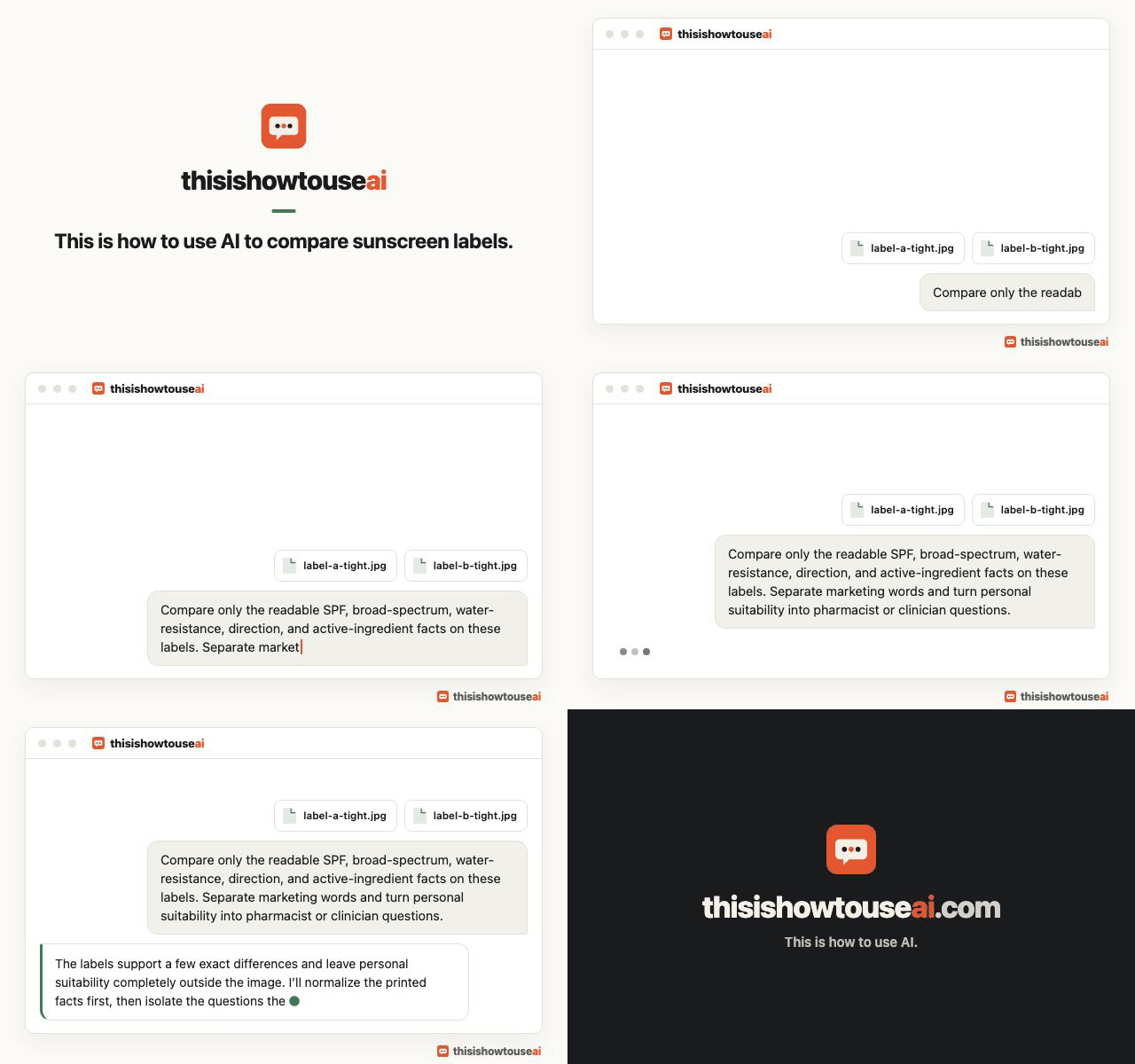
This is how to use AI to compare sunscreen labels.
One bottle says lightweight. Another says sport. A third emphasizes mineral. Those words can help a shopper find the shelf, but the useful comparison lives in the regulated facts, directions, warnings, and the way the product will actually be used.
Type the key label text or capture only the package panels. Do not add a skin history or prescription list. Ask AI to quote what it can read, separate marketing language, and turn any personal health question into something for a pharmacist or clinician.
The label prompt:
Compare these two sunscreen label excerpts for ordinary outdoor errands. Product A lists SPF 50, broad spectrum, water resistant 80 minutes, and reapply at least every two hours. Product B lists SPF 40, broad spectrum, water resistant 40 minutes, and the same two-hour reapplication direction. Their active ingredient lists are provided below.
Create sections for exact label facts, meaningful differences, marketing words that prove nothing by themselves, and questions for a pharmacist or clinician. Do not decide medical suitability or invent ingredient effects.
Swap in readable text from the current packages. The exact-facts-versus-suitability split is the part that matters.
Level up the ask:
One more move before you send it. Ask this first:
Rewrite my prompt above into a version that will get me a better result. Tell me what you changed and why, then answer the improved version.
Keep the comparison on the label
A useful answer should normalize the claims and show which difference changes use. Water-resistance duration may matter for one situation and not another. A texture word may matter to preference but does not establish protection. Ingredient questions should remain questions.
- Quote: Preserve the exact SPF, broad-spectrum, water-resistance, direction, and warning language.
- Compare: Explain which printed difference could change how the product must be used.
- Escalate: Send allergy, irritation, medication, age, condition, and suitability questions to a pharmacist or clinician.
Read the package you will use
Formulas and directions can change. Confirm the current package, expiration, warnings, and official guidance. If the label is blurry or a panel is missing, take another tight photo rather than letting the chat fill the gap.
AI makes two dense labels easier to compare. The package carries the current facts, and a qualified person carries the personal health judgment.
- Share only: Typed public label text or tight new package photos; exclude people, receipts, prescriptions, medical history, addresses, and surrounding shelves.
- Verify: Active ingredients, directions, warnings, expiration, water-resistance claims, and personal suitability on the current package and with a pharmacist or clinician when needed.
This is how to use AI.