
This is how to use AI to plan your errands in one efficient route
Order public stops by geography, opening windows, and what must happen first without sharing your home address or live location.
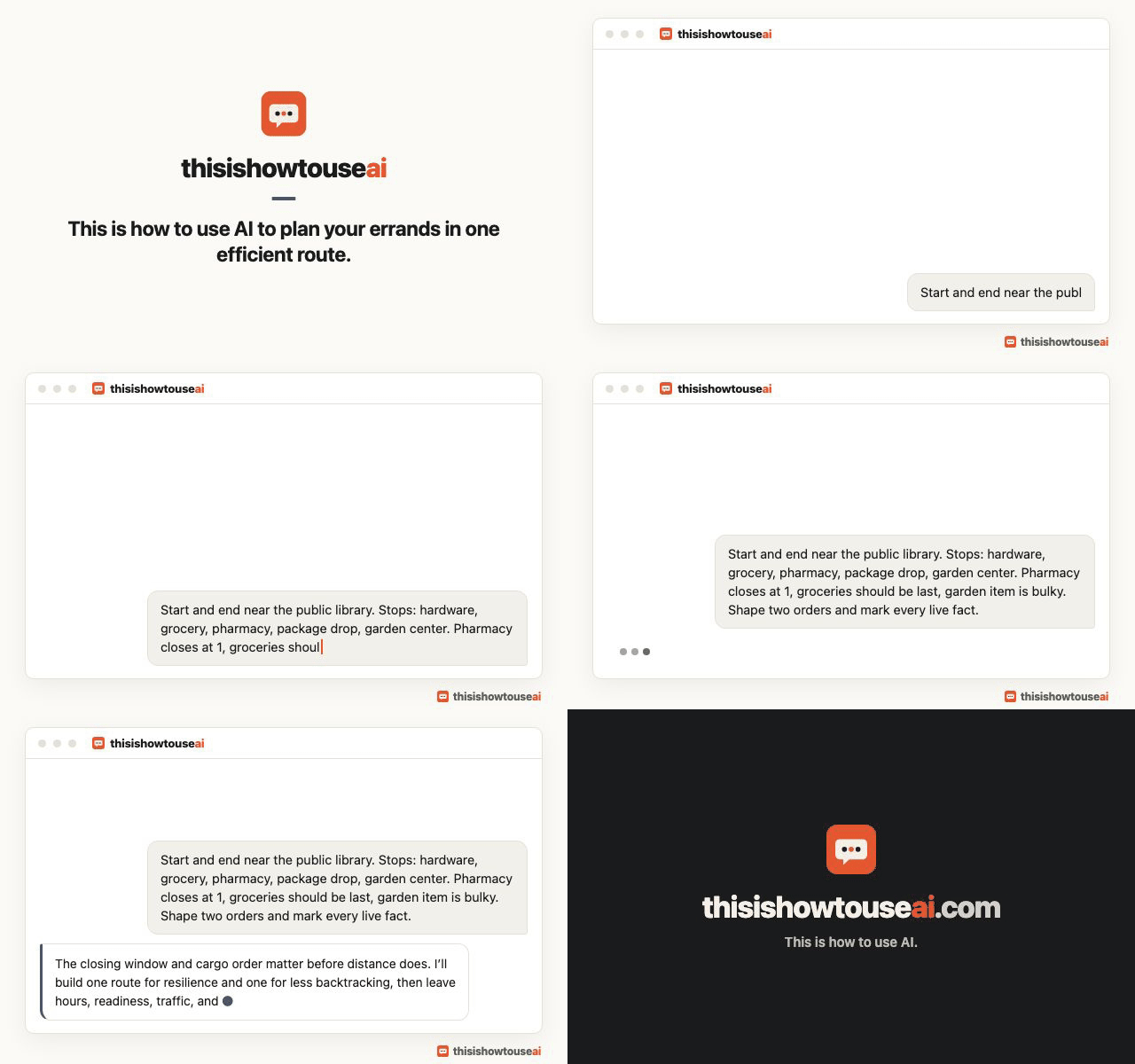
This is how to use AI to plan your errands in one efficient route.
Six errands are not just six pins. One item must stay cold, one store closes early, one pickup is not ready, and crossing the same road twice adds more time than the map suggests. The route needs task order as well as geography.
Use a public landmark or broad area as the starting point, not a home address. List only public stops and ordinary constraints. Ask AI for a route shape and live checks, then use a current map for the actual drive.
The errand-route prompt:
Shape a Saturday errand route starting and ending near the public central library. Stops: hardware store, grocery store, pharmacy counter, package drop, and garden center. The pharmacy closes at 1:00, the package drop has no deadline, groceries should be last, and the garden item is bulky. I have 9:30 to 1:30.
Give me two route orders with the reason for each sequence, what current facts could change it, and a pre-departure check. Do not invent travel times, inventory, or pickup status.
Swap in public stops, a public starting area, and real sequencing constraints. The order-before-map structure is the part that matters.
Level up the ask:
One more move before you send it. Ask this first:
Rewrite my prompt above into a version that will get me a better result. Tell me what you changed and why, then answer the improved version.
Let the task change the route
A useful answer should protect the closing window, keep temperature-sensitive items late, and make the bulky item compatible with what remains in the vehicle. It may offer one order for minimum backtracking and another for deadline resilience.
- Constrain: Mark closing times, readiness, storage, temperature, and tasks that depend on another stop.
- Sequence: Choose the order that protects the most fragile constraint before optimizing distance.
- Refresh: Recheck hours, traffic, inventory, and pickup status immediately before leaving.
Hand the final route to a live map
Use current business and transportation sources for hours, closures, traffic, access, and parking. Follow road rules and live conditions over the draft. Keep private pickups and appointments out of the chat.
AI organizes the logic so the map has a better problem to solve. The live route still belongs to current sources and the person driving it.
- Share only: Public business names, a public starting area, broad timing, and task constraints; exclude home address, live location, order codes, account pickups, and private appointments.
- Verify: Current hours, inventory, pickup readiness, road conditions, travel times, parking, and accessibility with maps, businesses, and transportation sources.
This is how to use AI.