
This is how to use AI to prepare for a job interview
Use a public job posting and a few non-identifying experience notes to rehearse the follow-up questions your background invites.
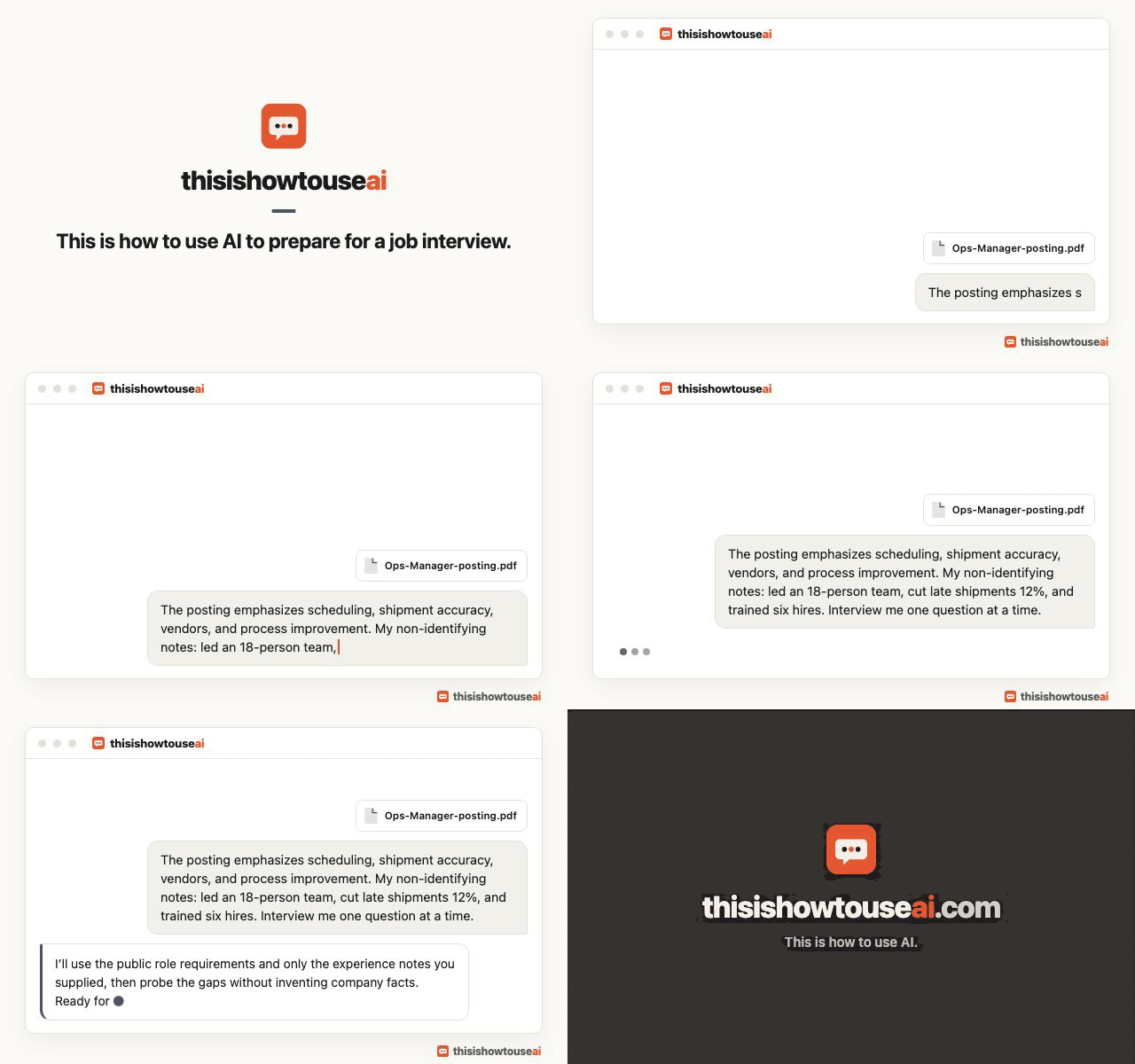
This is how to use AI to prepare for a job interview.
Standard interview prep is reading “top 20 interview questions” listicles and mentally noting that you would definitely say something great. Then the interviewer asks a completely normal follow-up and you hear yourself begin a sentence with no plan for how it ends.
The problem was never knowing the questions. It’s that you’ve never said your answers out loud to something that responds.
The move
Two ingredients: the public job posting and a few notes you write for this exercise. Copy the role’s public requirements, then add non-identifying bullets about relevant responsibilities, skills, and accomplishments you can prove. Do not upload a complete résumé or include contact details, employer secrets, references, employee information, or confidential results.
Copy this prompt:
I’m preparing for an Operations Manager interview at a regional logistics company. The public posting emphasizes team scheduling, shipment accuracy, vendor coordination, and process improvement.
My relevant notes:
- Led scheduling for an 18-person operations team
- Reduced late shipments by 12 percent over two quarters
- Trained six new hires on the inventory system
- Coordinated weekly issues with three outside vendors
- I have not owned a full department budget
Run me through focused interview practice:
1. What are the 8 questions this interviewer may ask based on the role and what my notes do and do not show?
2. Which parts of my background look like gaps or risks for this role? Ask me the uncomfortable question about each.
3. Interview me one question at a time. After each answer, ask the natural follow-up, then give me one specific improvement.
4. At the end, tell me which 3 true stories from my background I should have ready and what each one demonstrates. Do not invent experience or company facts.
Swap the details for your own situation. The structure is the part that matters.
Level up the ask:
One more move before you send it. Ask this first:
Rewrite my prompt above into a version that will get me a better result. Tell me what you changed and why, then answer the improved version.
The part that actually changes things
The one-at-a-time interview is the useful part. Answer out loud and let the follow-up expose the vague sentence, missing result, or unsupported claim while you can still improve it. The goal is not a memorized answer. It is a true example you can explain from more than one angle.
The gap scan matters too. Practice the uncomfortable version before the interview, but do not let AI invent what the company will ask. Confirm current facts about the role, product, and company on the employer’s own materials.
Don’t skip this part
- Ask it what questions you should ask them, tailored to the posting, not “what does success look like” recited from the same listicles.
- Do a final round the morning of, just the two hardest questions. Warm, not crammed.
Confidence here is not weather. It comes from hearing your own answer, noticing where it thins out, and trying again.
- Share only: The public job posting plus a few self-written, non-identifying bullets about relevant roles, skills, and true accomplishments; do not upload a complete résumé.
- Verify: Role, company, product, salary, and policy details on the employer’s current materials, and every claim about your experience against your own records.
This is how to use AI.