
This is how to use AI to reconnect with a friend without making it awkward
A long gap can make a simple hello feel heavier than it needs to be. Use AI to choose a low-pressure shape, then write the real message yourself.
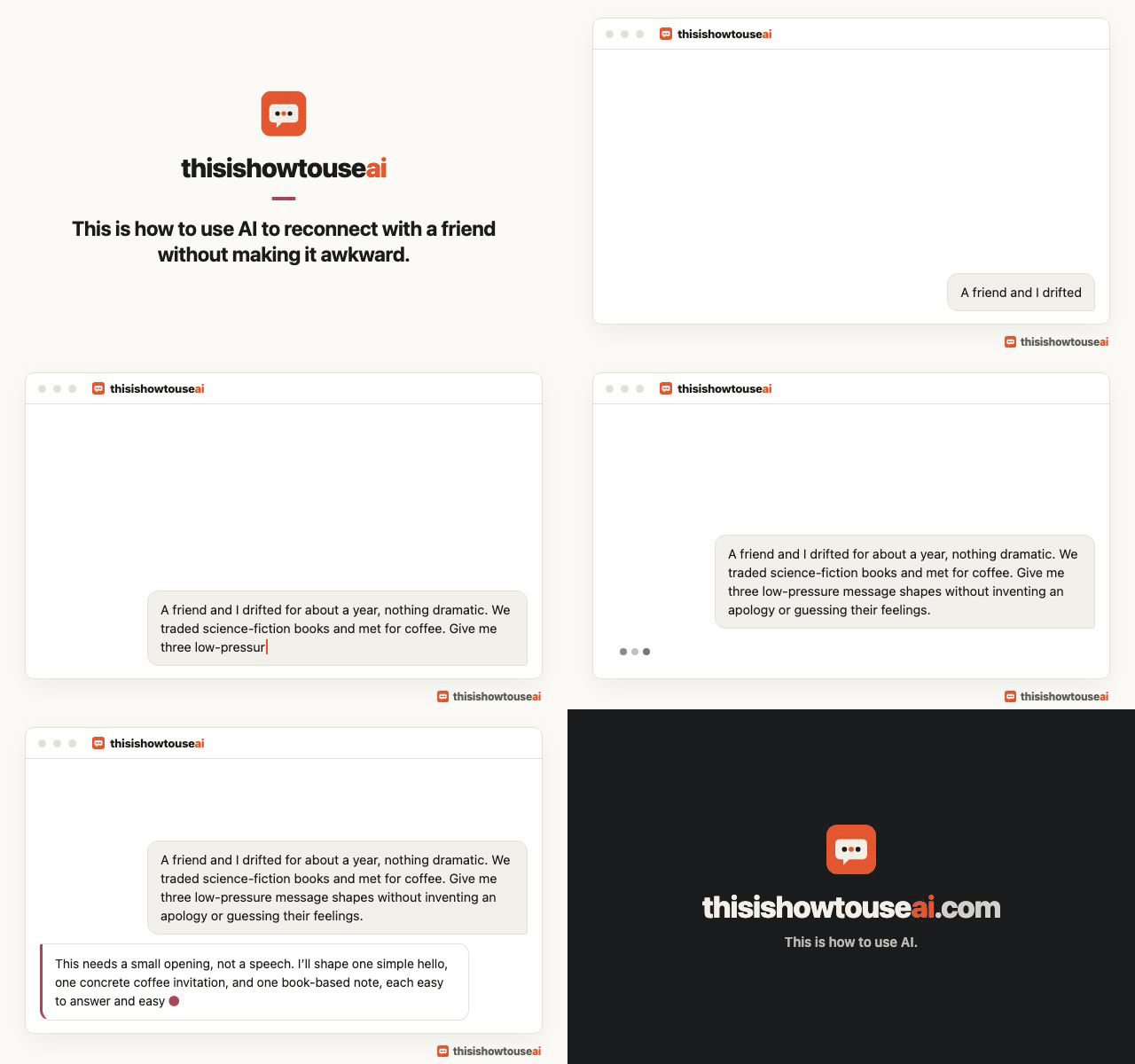
This is how to use AI to reconnect with a friend without making it awkward.
Six months becomes a year because every draft sounds wrong. One is too dramatic. One pretends no time passed. One asks for a vague “catch up sometime” that neither person can act on. The useful move is not finding perfect words. It is choosing a small invitation that does not demand an explanation or an instant return to closeness.
Choose the shape before the sentence
Give AI only harmless structure: roughly how long it has been, a shared interest, the pressure level you want, and what you can realistically invite them to do. Do not paste the old thread or narrate private conflict details. You need help with the shape, not analysis of the other person.
The reconnection prompt:
I want to reconnect with a friend I have not spoken to in about a year. Nothing dramatic happened; work and distance took over. We used to trade science-fiction books and meet for coffee. I will be near their side of town on two Saturday mornings next month.
Give me three low-pressure message shapes: one that simply opens the door, one that includes a specific coffee invitation, and one built around sharing a book recommendation. Keep each under four sentences. Do not invent an apology, explain their feelings, or make the message emotionally heavy.
Swap in your own harmless shared interest and real availability. The low-pressure shapes are the part that matters.
Level up the ask:
One more move before you send it. Ask this first:
Rewrite my prompt above into a version that will get me a better result. Tell me what you changed and why, then answer the improved version.
Use the draft as a mirror
Read each version out loud. Delete any sentence you would never say. Add one specific detail that is genuinely yours, such as the book that made you think of them or the coffee shop you both liked. If the message sounds as if it came from a customer-service team, it is not ready.
A strong note makes responding easy and not responding survivable. It offers a clear opening without demanding reassurance, an explanation, or immediate plans.
Know when this is the wrong tool
If the gap involves harm, betrayal, harassment, a serious apology, or a boundary the other person set, do not use AI to engineer a way around it. Respect the boundary and seek human perspective if you need help taking responsibility. This method is for ordinary distance, not consent management.
AI can lower the friction around the first draft. You still decide whether reaching out is kind, and the message still has to sound like you.
- Share only: The length of the gap, broad shared interests, desired tone, and general availability; leave out names, message history, conflict details, addresses, and another person’s private information.
- Verify: The final words against your own voice and the invitation against what you genuinely have time and willingness to offer before sending it.
This is how to use AI.