
This is how to use AI to turn an article into active reading practice
Stop at a short lawful excerpt and turn reading into prediction, recall, and evidence questions instead of another summary.
This is how to use AI to turn an article into active reading practice.
A clean summary can make an article feel understood because the hard choices have already been made for you. Active reading asks you to predict, retrieve, connect a claim to evidence, and notice where the argument could fail.
Use a public link when the tool can access it, your own summary, or only the short excerpt needed for discussion. Keep the complete article open. Ask AI to question you one move at a time and stay inside the source.
The active-reading prompt:
Use only this short original passage: “A city added shade structures at ten bus stops. Riders reported that waits felt shorter, although the published summary did not measure actual wait times. The project team plans to compare summer ridership before and after installation.”
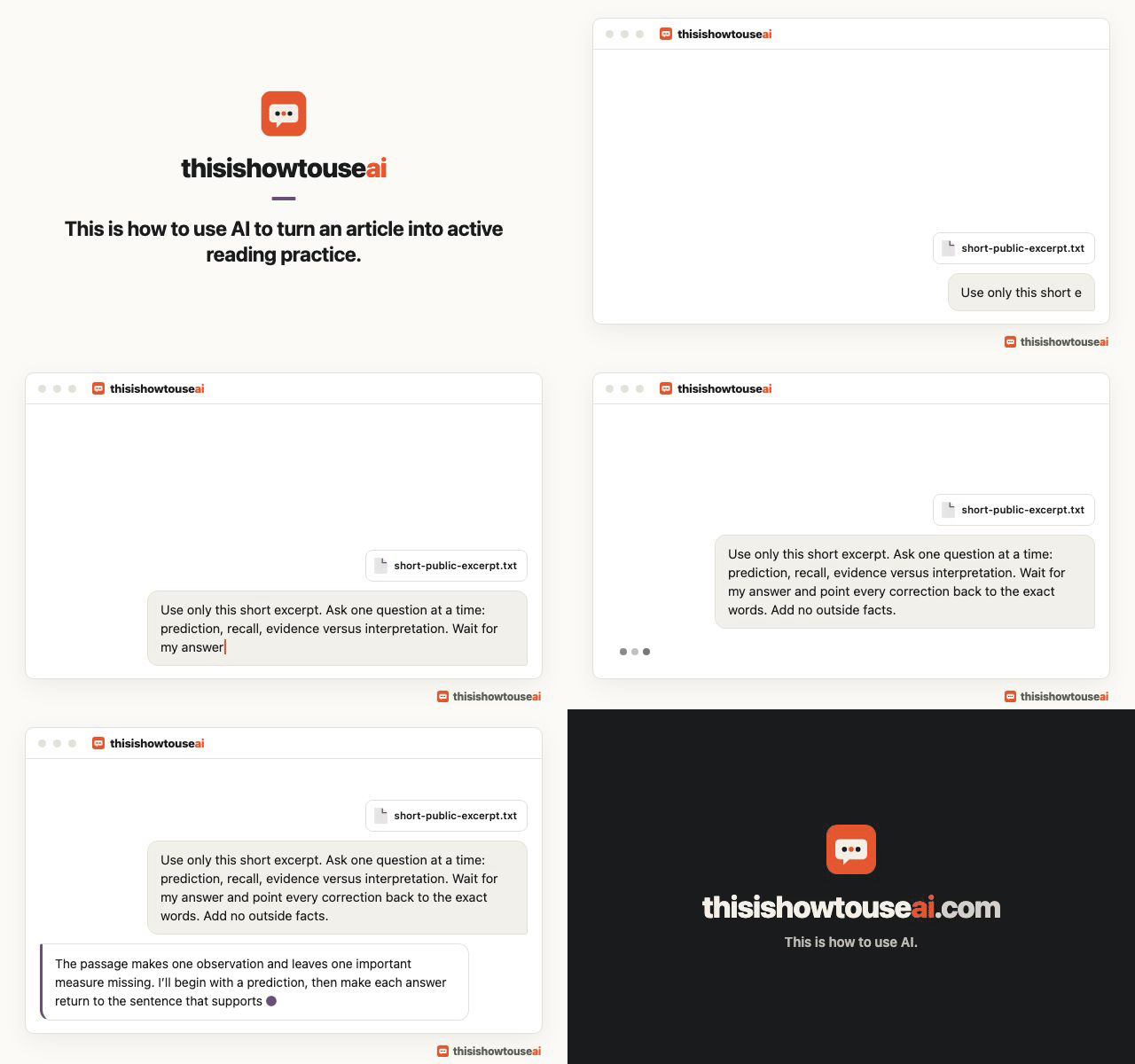
Ask me one question at a time. Begin with a prediction, then test recall, then ask which sentence is evidence and which is interpretation. Do not add outside facts. When I answer, point me back to the exact words that support or limit my answer.
Swap in a public link, your own summary, or a short lawful excerpt. The question-before-summary rhythm is the part that matters.
Level up the ask:
One more move before you send it. Ask this first:
Rewrite my prompt above into a version that will get me a better result. Tell me what you changed and why, then answer the improved version.
Make the source answer back
A useful exchange forces a return to the text. It may ask what the project measured, what it did not measure, and which future comparison could change the interpretation. The chat should reveal reading gaps without silently supplying a new article.
- Predict: State what you expect the next claim or evidence to do before reading it.
- Retrieve: Close or cover the passage and explain the central distinction from memory.
- Locate: Tie an answer to the exact sentence, table, or cited evidence that supports it.
Return every correction to the source
AI can misquote, omit context, or overstate a passage. Verify quotations and claims in the complete article. If the article cites a study, report, or dataset, inspect that primary source before carrying the conclusion forward.
You finish with a sharper understanding of what the article actually established and a visible list of what still belongs outside it.
- Share only: A public link, your own summary, or a short lawful excerpt needed for discussion; exclude private coursework, grades, paid text dumps, and confidential documents.
- Verify: Claims, quotations, definitions, and interpretations against the complete original source and any primary evidence it cites.
This is how to use AI.