
This is how to use AI to turn your notes into a practice quiz
Rereading notes can feel fluent even when nothing is available from memory. Turn one clean topic excerpt into a quiz that reveals what needs another pass.
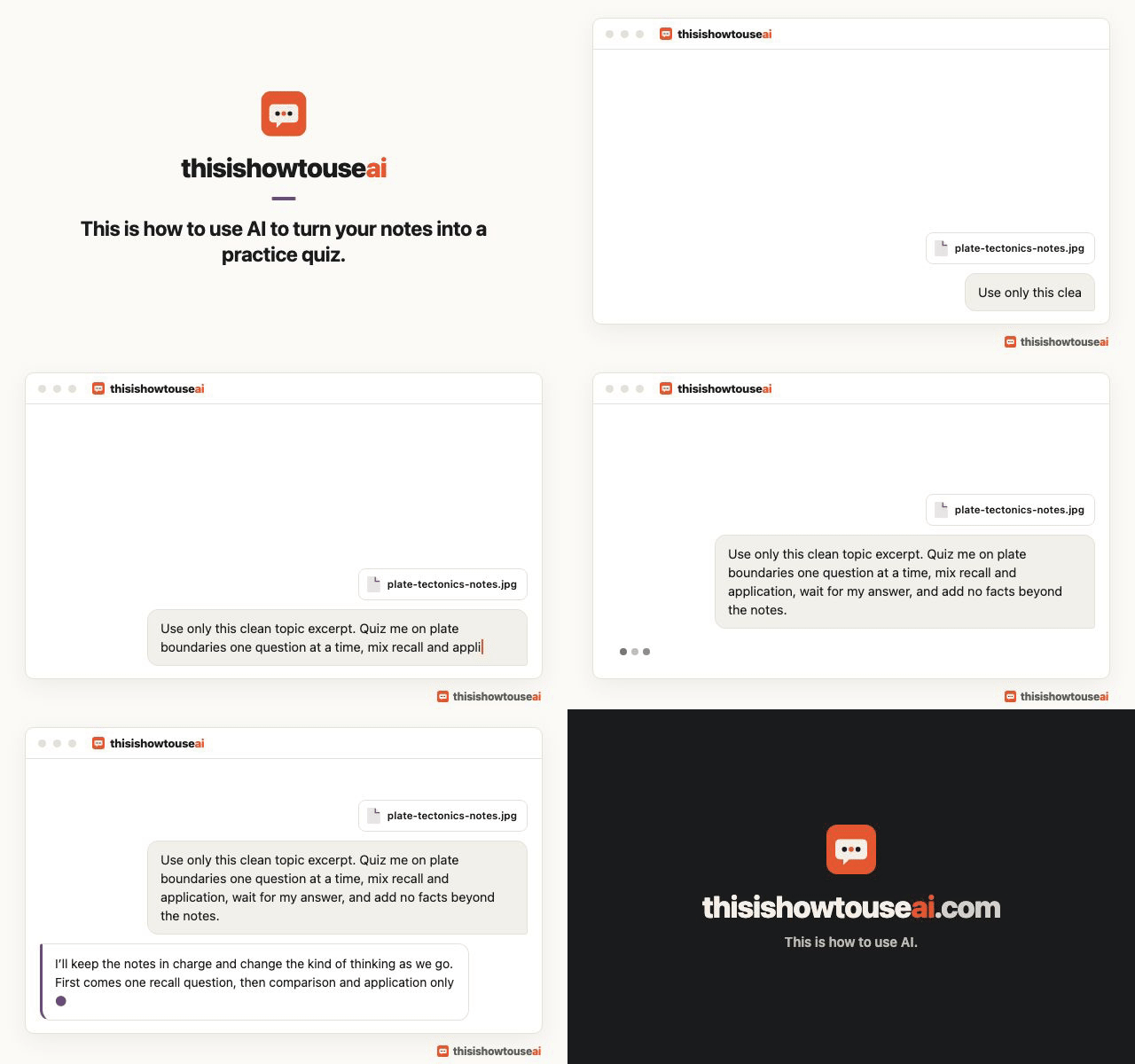
This is how to use AI to turn your notes into a practice quiz.
A page can look familiar because you have read it five times. That feeling is not the same as being able to explain the idea with the page closed. A short AI quiz can expose the gap in minutes, as long as the notes remain the source and the chat does not quietly teach from its own memory.
Give it one clean slice
Choose one concept, not an entire notebook. Retype the important lines or take a tight new photo that includes only the subject matter. Leave out names, grades, school details, instructor comments, and anything from another class. Then make the chat stay inside that material.
The practice prompt:
Use only the notes below to quiz me on basic plate tectonics.
Earth’s outer shell is broken into moving plates. At divergent boundaries, plates move apart and new crust can form. At convergent boundaries, plates move toward each other and one plate may move beneath another. At transform boundaries, plates slide past each other. Earthquakes can occur at all three types.
Ask one question at a time. Mix recall, comparison, and one simple application question. Wait for my answer before evaluating it. When I answer, tell me what the notes support, what I missed, and what the notes do not establish. Do not introduce facts from outside this excerpt.
Swap in one clean topic excerpt from your own notes. The one-question rhythm and source boundary are the part that matters.
Level up the ask:
One more move before you send it. Ask this first:
Rewrite my prompt above into a version that will get me a better result. Tell me what you changed and why, then answer the improved version.
Make the quiz do more than recognize words
A useful sequence changes the kind of thinking. “Name the three boundary types” checks recall. “How is a divergent boundary different from a transform boundary?” checks contrast. “Two plates slide alongside each other; which boundary matches the notes?” checks whether you can apply the definition.
Answer before looking. If you are wrong, ask for one small clue instead of the answer. At the end, ask for a three-item list of what to review, tied only to errors you actually made. That turns the chat into feedback instead of another page to reread.
Keep the source in charge
Notes can be incomplete, and AI can add a convincing detail that was never on the page. For anything that will be graded or used in real work, compare the correction with the assigned reading, instructor material, or responsible reference. The chat helps you find your weak spots. It does not become the textbook.
You finish with something more useful than “I reviewed”: a short map of what you can retrieve, what you confuse, and what deserves the next ten minutes.
- Share only: A retyped topic-only excerpt or tight new capture containing only the subject matter, with names, grades, school identifiers, private feedback, and other pages excluded.
- Verify: Every answer and correction against the assigned source, instructor materials, or another authoritative reference before learning it as fact.
This is how to use AI.