
This is how to ask AI what would change its answer
A confident answer may rest on one fragile variable. Ask what would reverse, weaken, or leave it unchanged before treating the recommendation as settled.
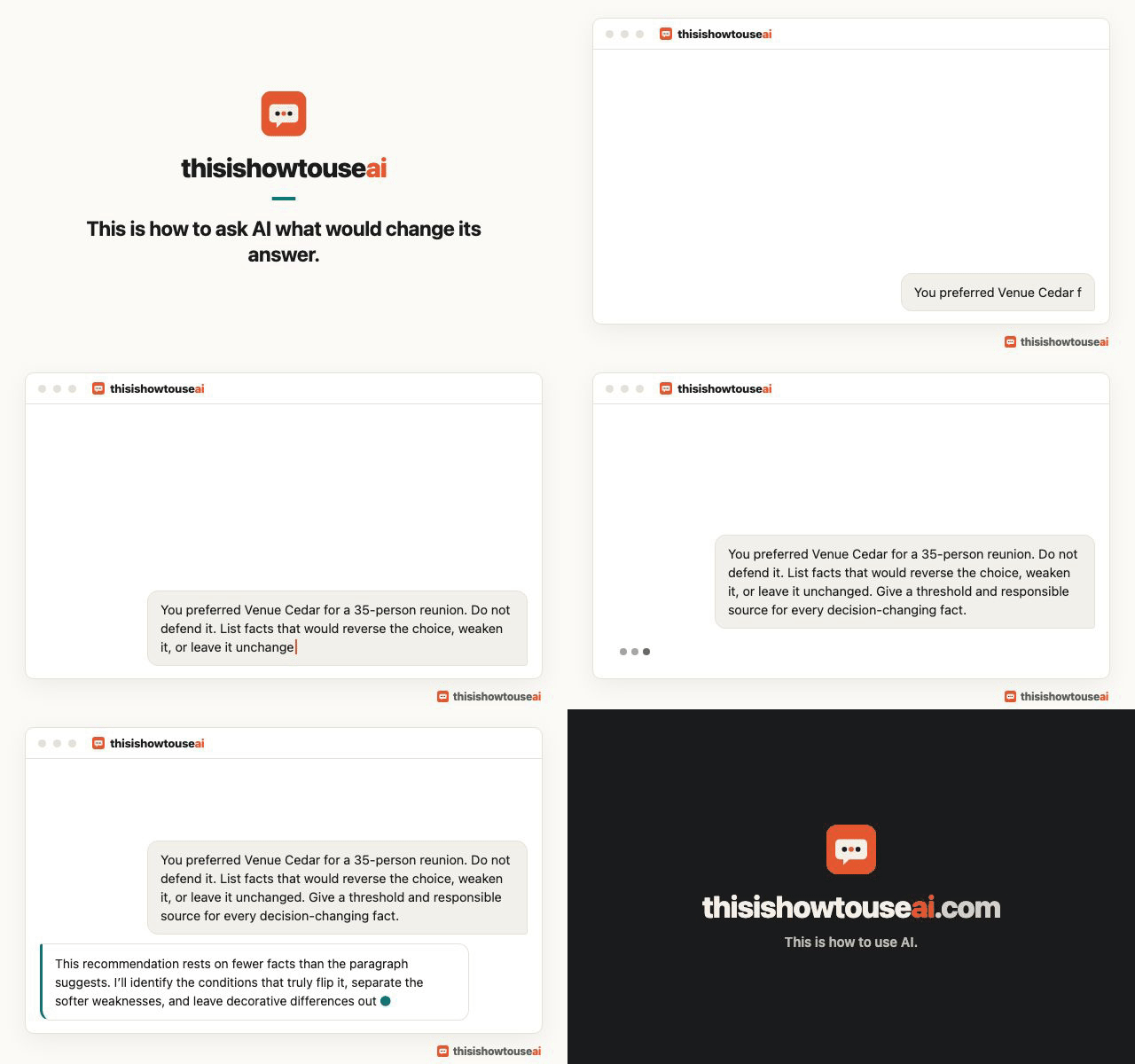
This is how to ask AI what would change its answer.
The answer says Venue Cedar is the better place for a family reunion. That conclusion feels useful until you learn that it depends almost entirely on one unconfirmed assumption: the outdoor space is included in the quoted price. A recommendation is much easier to trust when you know what could make it move.
Ask for the flip conditions
Use a harmless decision and make the system work against its own conclusion. You want variables, thresholds, and missing evidence, not a longer defense of the first answer.
The answer-change prompt:
You recommended Venue Cedar over Venue Mesa for a 35-person family reunion because Cedar appears quieter, has outdoor space, and costs $250 less.
Do not defend the recommendation. List the facts that would reverse it, the facts that would weaken it without reversing it, and the facts that sound important but would not change it. For each decision-changing fact, explain the threshold and name the source that should confirm it. Treat prices, capacity, accessibility, included areas, and cancellation terms as unverified until checked.
Swap in your own harmless recommendation. The reverse, weaken, and unchanged buckets are the part that matters.
Level up the ask:
Rewrite my prompt so it finds the smallest set of facts capable of changing the recommendation and prevents the first answer from anchoring the review. Tell me what you changed and why, then use the improved version.
Look for thresholds, not adjectives
“Accessibility matters” is vague. “If the entrance, restrooms, or main gathering area are not step-free, the recommendation reverses” is a decision rule. “If the outdoor area costs more than $400 extra, the price advantage disappears” is another. Thresholds tell you what to ask and why the answer matters.
The unchanged bucket is useful too. If both venues are within ten minutes of the same hotel, another small difference in driving time may not deserve attention. You are learning which uncertainty can stay unresolved.
Use the result as a call sheet
Turn the decision-changing variables into questions for the venues. Confirm capacity, included spaces, accessibility, fees, and cancellation terms directly. Then rerun the comparison using the confirmed facts.
This is not a trick for making AI certain. It is a way to discover whether the answer is sturdy, conditional, or waiting for one phone call.
- Share only: A harmless decision, public option facts, and broad constraints; keep contracts, payment records, exact addresses, and private correspondence out.
- Verify: Every decision-changing variable with the venue, provider, original document, direct observation, or other source responsible for that fact.
This is how to use AI.