
This is how to check AI’s work without checking everything
A polished answer can contain ten claims. You usually need to find the one or two that carry the decision, then check those at the source.
This is how to check AI’s work without checking everything.
A polished AI answer can contain ten claims. Your choices can feel equally bad: trust the whole thing, or spend longer checking it than you would have spent doing the task yourself. There is a third move. Find the claims that carry the decision.
Start by making the answer sort itself
Imagine AI compared two desk chairs and recommended Chair B. Its answer says the warranty is longer, the mesh should feel cooler, reviewers describe the seat as firm, and the extra $180 is worth paying because you work at the desk all day.
Those sentences do not all deserve the same kind of trust. Run the answer back through this review:
The review prompt:
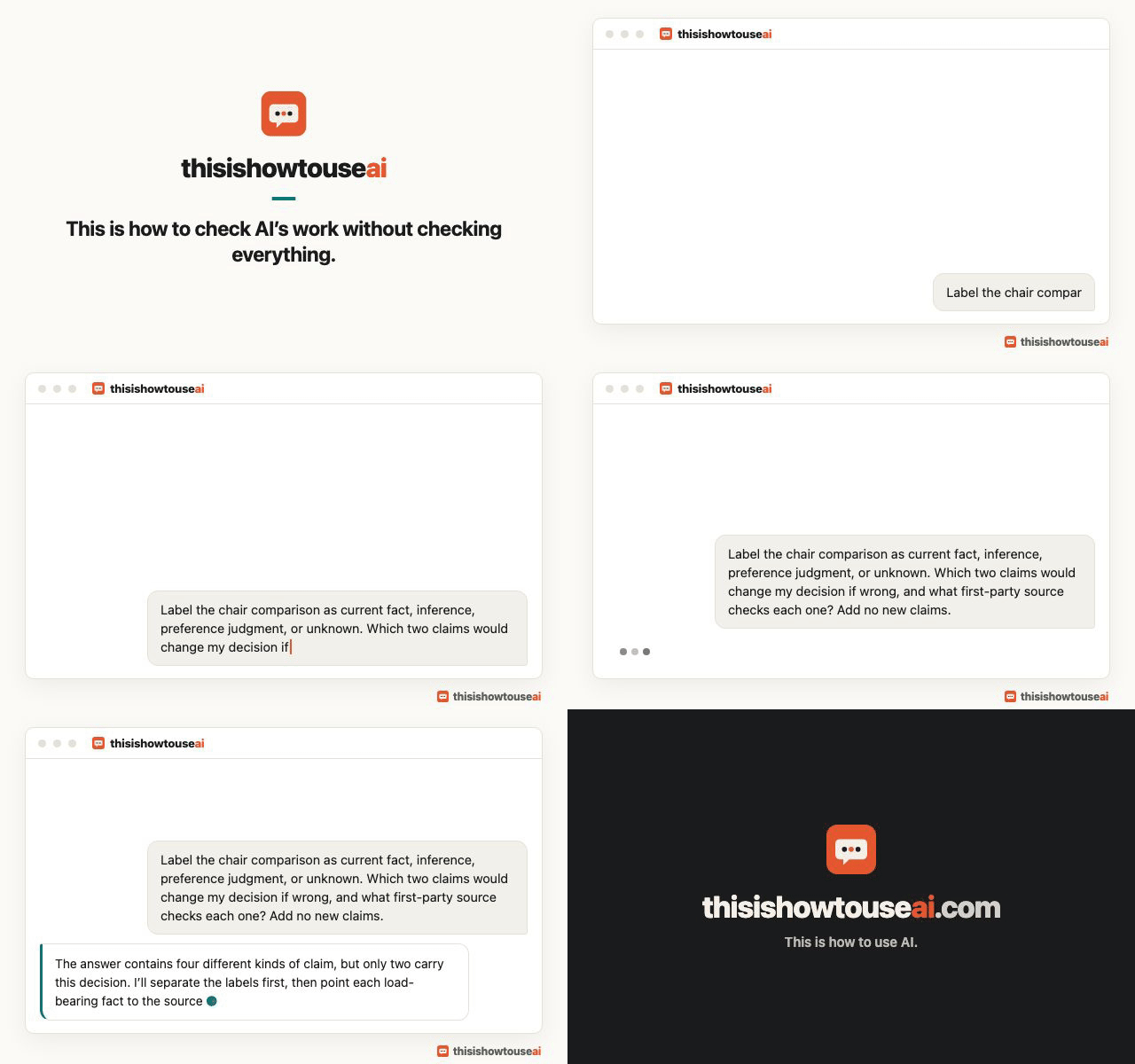
Review the chair comparison you just gave me. Break every important claim into one of four labels: current fact, inference, preference judgment, or unknown. Then identify the two claims that would most change my decision if they are wrong. For each of those two, name the exact first-party source I should check. Do not add new product claims while reviewing the old ones.
Swap the chair comparison for your own harmless answer. The structure is the part that matters.
Level up the ask:
Rewrite my review prompt so it catches any assumption I missed and keeps the verification list to the smallest useful set. Tell me what you changed and why, then use the improved version.
What the labels do
- Current fact: a warranty length, price, return window, opening hour, rule, specification, or schedule. It needs the current responsible source.
- Inference: a conclusion drawn from facts, such as mesh probably feeling cooler. Ask what evidence supports it and what would make it fail.
- Preference judgment: whether an extra $180 is worth it. AI can help expose the tradeoff, but your priorities make the call.
- Unknown: something the answer cannot establish from the input. Turn it into a question instead of letting it hide inside the recommendation.
The labels are not a fact-check. They are a map of where a fact-check will pay off.
Find the load-bearing claim
Ask one practical question: if this claim were wrong, would I choose differently, spend materially more, miss a deadline, or take a risk I did not intend? If the answer is no, it may not deserve your next five minutes. If the answer is yes, that claim carries the decision.
In the chair example, a descriptive phrase like “clean-looking” probably does not carry the decision. The warranty and return window might. Two minutes on the manufacturer’s current pages can do more than twenty minutes checking every sentence in the comparison.
When the shortcut is not enough
Some answers deserve a wider check. Health, legal rights, large financial commitments, physical safety, and anything irreversible should not be reduced to two convenient claims. Use AI to organize the questions, then let the actual document, current authority, inspection, or responsible professional carry the result.
The aim is not to make every answer provable. It is to know which uncertainty can change your life and spend your attention there.
- Share only: A harmless answer excerpt or your own short summary of its claims; keep private conversations, sensitive records, and confidential work out of the review.
- Verify: Each decision-carrying claim at the accountable first-party source: the current product page, official policy, original document, responsible agency, or qualified professional.
This is how to use AI.