
This is how to make AI show its assumptions
A polished recommendation can rest on invisible beliefs about your budget, priorities, and situation. Expose them before you improve the answer.
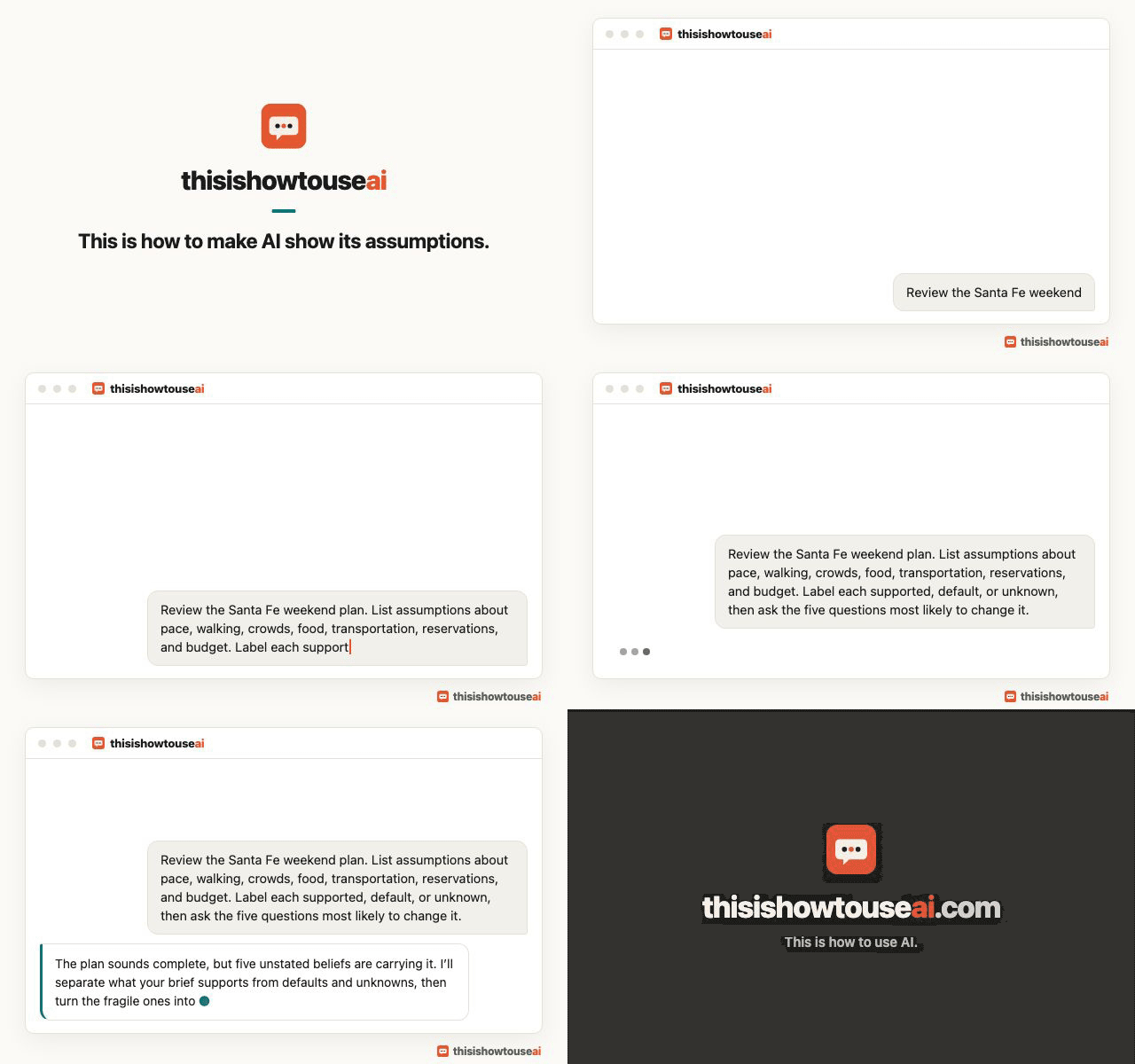
This is how to make AI show its assumptions.
AI gives you a polished weekend plan: brunch, a busy market, a long drive, and dinner downtown. It never asked whether you like crowds, whether anyone has limited mobility, or whether the $180 estimate includes parking. The plan sounds complete because the missing beliefs are hiding underneath it.
Ask for the floor under the answer
Use a harmless recommendation while learning this technique. The goal is not to make AI defend itself. It is to reveal which beliefs would make the answer change.
The assumption prompt:
Review the weekend plan you just proposed for two adults visiting Santa Fe with a $180 activity and meal budget.
List the assumptions you made about pace, walking tolerance, transportation, crowds, food preferences, reservations, and what the budget includes. Label each assumption as supported by my prompt, a reasonable default, or unknown. Then choose the five assumptions most likely to change the plan and turn them into short questions for me. Do not revise the plan yet.
Swap in your own harmless recommendation. The supported, default, and unknown labels are the part that matters.
Level up the ask:
Rewrite my assumption-check prompt so it exposes any hidden constraint I missed and keeps the questions focused on facts that could change the answer. Tell me what you changed and why, then use the improved version.
Three kinds of assumption
- Supported: the prompt explicitly says two adults and a $180 ceiling. These can still be misunderstood, but they are not invisible.
- Reasonable default: the answer assumes ordinary walking and no dietary restriction because nothing said otherwise. Defaults help an answer begin, but they need light labels.
- Unknown: the answer treats parking as available or a market as open without a current source. These are gaps, not preferences.
Correct the five that matter, then ask for a fresh answer. Do not spend time resolving an assumption that cannot change the decision. Whether you enjoy two hours in a market matters. The color of the rental car does not.
Use assumptions as a quality signal
A good revision should become more conditional, not merely longer. It might offer a low-walking version, separate the fixed budget from parking, and mark hours for a current check. If the answer simply repeats your corrections inside the same plan, ask what would now make that plan fail.
This technique works for comparisons, schedules, drafts, and recommendations. It does not make the answer true. It makes the hidden parts available for correction, which is the first condition for making the answer fit.
- Share only: A public or harmless decision plus the minimum goals and constraints needed to examine it; keep private records and other people’s confidential details out.
- Verify: Every assumption that depends on a current outside fact, and every corrected constraint that materially changes the recommendation, at its responsible source or in the real situation.
This is how to use AI.