
This is how to turn a vague goal into the next useful action with AI
A giant plan can make a fuzzy goal feel even farther away. Ask for the smallest action that creates new information or visible progress today.
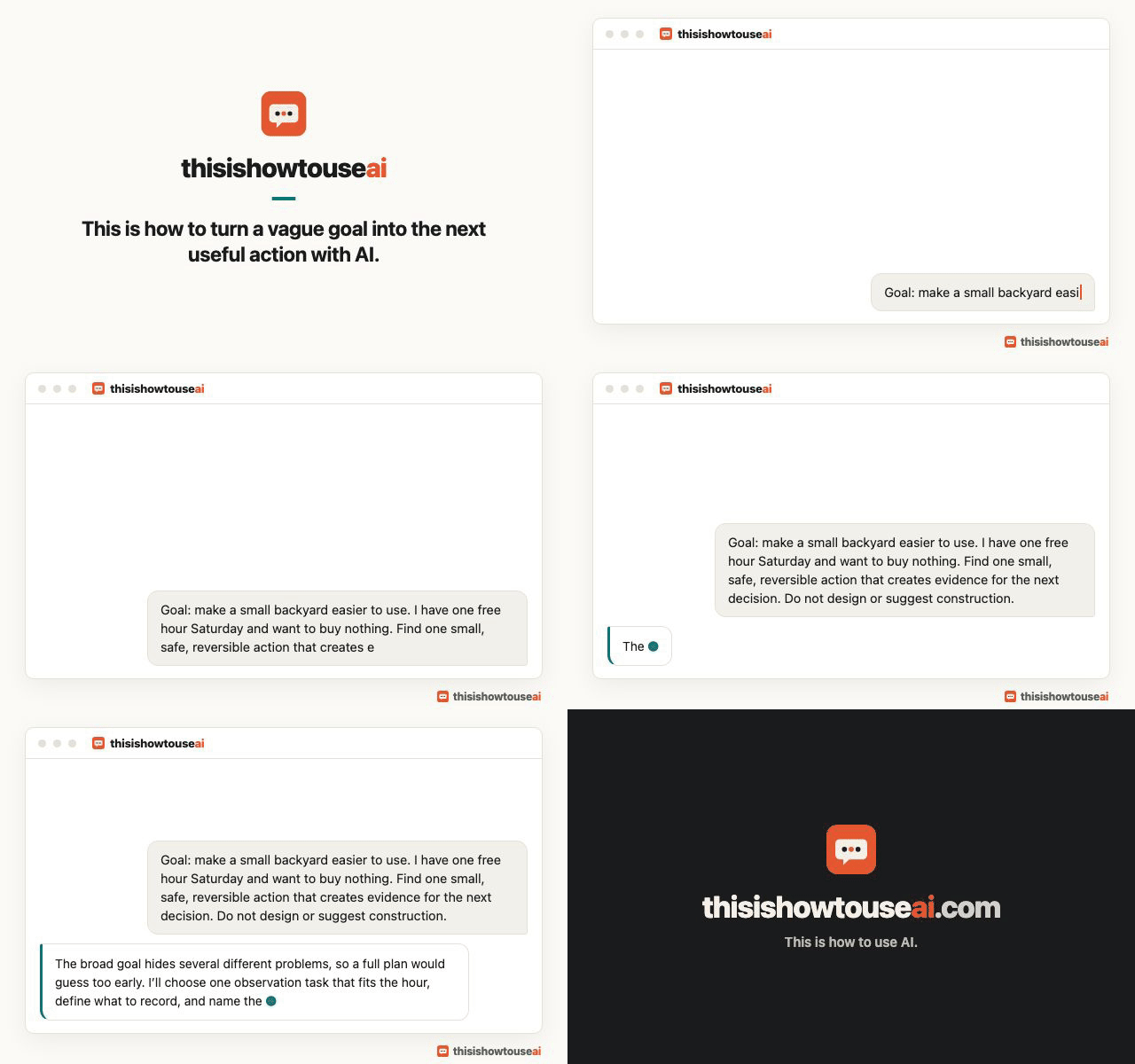
This is how to turn a vague goal into the next useful action with AI.
“Make the backyard easier to use” can produce a twelve-week plan, a shopping list, and three design styles before you know what is actually wrong. Maybe the chairs are always in the sun. Maybe the path becomes muddy. Maybe nobody goes outside because setup takes fifteen minutes. The next useful action should reveal the problem, not decorate the guess.
Ask for information-producing action
The next-action prompt:
My broad goal is to make a small backyard easier to use. I have one free hour this Saturday and do not want to buy anything yet. The space has a table, four chairs, two planters, and one shaded corner.
Give me the smallest safe action that creates useful information or visible progress in that hour. Do not design the yard or suggest construction. First identify the assumptions hidden inside the goal, then choose one observation or rearrangement task, the evidence I should record, and the decision that evidence will help me make next.
Swap in your own broad goal, time, and limits. The information-producing action is the part that matters.
Level up the ask:
Rewrite my prompt so the next action is smaller, observable, reversible, and useful even if my first theory is wrong. Tell me what you changed and why, then answer the improved version.
Use four filters
- Small: it fits the time and energy you actually have.
- Observable: you can tell whether it happened and what it revealed.
- Reversible: early action should avoid commitments while the problem is still fuzzy.
- Informative: it reduces uncertainty or creates the input for the next decision.
For the backyard, the action might be one hour spent using the current seating in two locations while recording sun, setup friction, and what gets in the way. That is less impressive than a full design, but it gives the next answer something real to work with.
Stop after the handoff
When the action is complete, return with a short observation: “The shaded corner was comfortable, but moving chairs blocked the door.” Now the next question is concrete. Resist asking for the entire project until the evidence earns it.
AI is often most useful before the plan, when it helps you discover what problem the plan should solve.
- Share only: The broad goal, available time, rounded budget, and harmless constraints; exclude wide home images, exact addresses, private schedules, and contractor documents.
- Verify: The proposed action against the real space, available time, budget, permission, and any safety or professional requirement before doing it.
This is how to use AI.