
This is how to know when AI needs a current source
Some questions ask for an explanation. Others ask what is true right now. The difference decides whether a plausible answer is useful or stale.
This is how to know when AI needs a current source.
“Why do airlines limit carry-ons?” and “What is my airline’s carry-on limit today?” look like neighboring questions. They are not. The first asks for an explanation. The second asks for a current policy from a specific company. A plausible old answer can handle the first and quietly cost you money on the second.
Ask what clock the answer lives on
- Stable explanation: background concepts, definitions, and mechanisms that change slowly. AI can explain them, although important details can still be wrong.
- Changing fact: prices, policies, laws, schedules, product specifications, officeholders, software interfaces, and business details. These need a current source.
- Live condition: weather, road closures, stock, availability, wait times, outages, and whether a place is open right now. These need the authority observing the condition now.
- Exact artifact: what your manual, receipt, policy, letter, or agreement actually says. The artifact carries the answer, but sensitive artifacts may need to stay outside the chat.
Many real questions contain more than one clock. AI can explain why a trail closes after storms, but the land manager’s current notice decides whether that trail is open today.
Make AI classify before it answers
The source-first prompt:
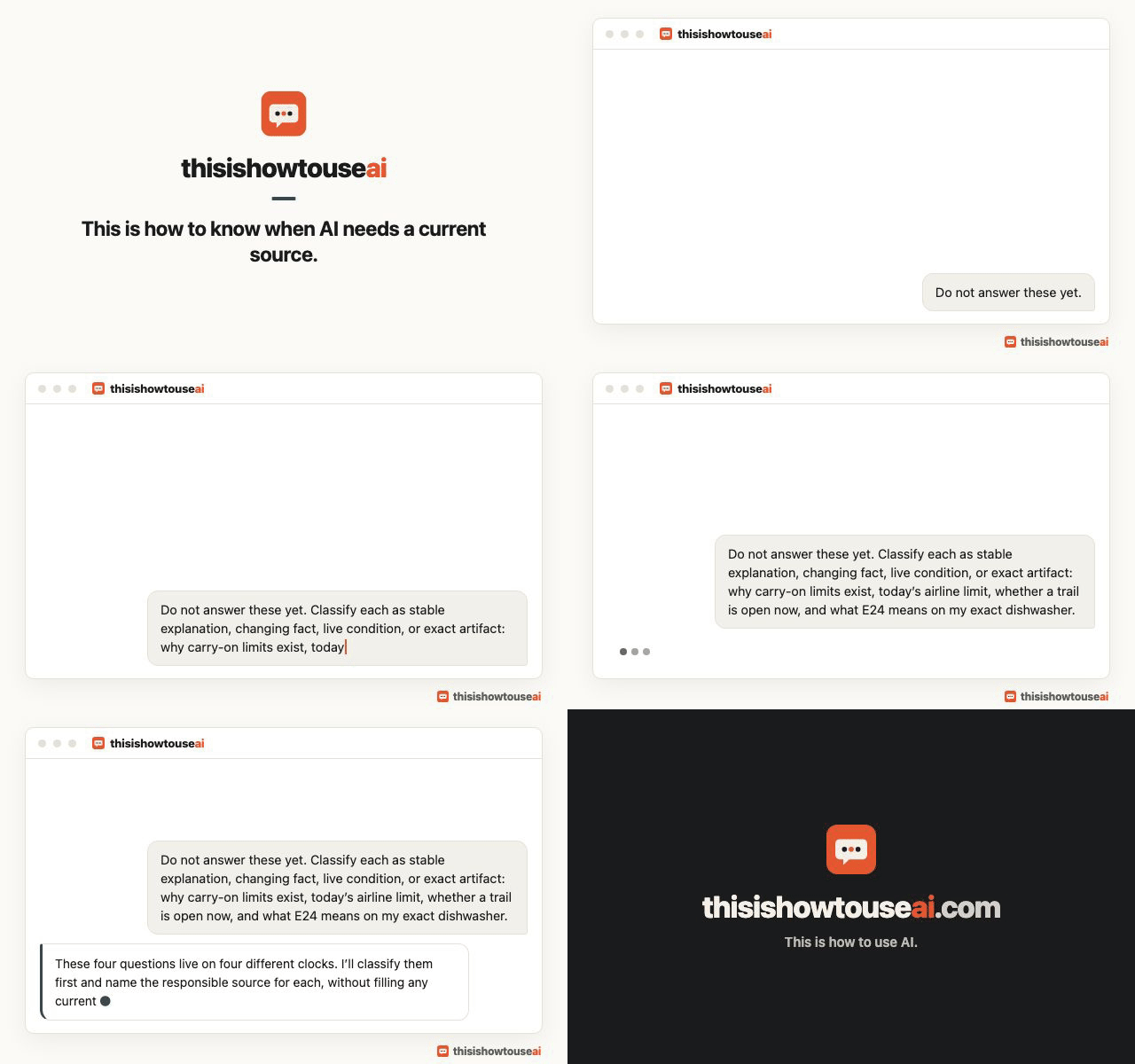
Classify each question below as stable explanation, changing fact, live condition, or exact artifact. Do not answer the questions. For each one, name the responsible first-party source that should carry the decision and tell me what detail I need to confirm there.
Why do airlines set carry-on limits?
What is the carry-on limit for my airline and fare today?
Is the trail open this morning after yesterday’s storm?
What does error code E24 mean on my exact dishwasher model?
Swap in your own public questions. Keep the instruction not to answer them yet; classification comes first.
This prompt does something subtle: it asks the AI to route the question to an authority before it gets a chance to improvise the fact.
Use the source closest to responsibility
For a product specification, start with the manufacturer’s current page or manual. For a government rule, use the responsible agency. For venue hours, use the venue. For a road closure, use the transportation or land authority. For the terms of your purchase, use the exact confirmation or policy that applies to it.
A search summary, forum answer, or AI citation can help you find that source. It does not replace the source. Check that the page actually supports the claim, applies to your location and situation, and is current enough for the decision.
When the exact artifact should stay offline
The source-first habit does not mean uploading every document. If the useful material is a private contract, medical record, financial statement, identity document, or booking tied to you, keep it outside the chat. Ask AI for a blank checklist of terms or questions, then compare that checklist to the real document yourself or with the accountable professional.
The simplest rule is this: explanations can begin in the chat. Facts that can change must finish at the source responsible for them.
- Share only: Hypothetical questions and public topics; do not upload a private booking, account record, contract, or identity-linked itinerary to ask whether its terms are current.
- Verify: Changing facts at the responsible first-party source and live conditions at the authority observing them now, using the exact document or provider that carries your decision.
This is how to use AI.