
This is how to tell what kind of answer AI is giving you
One confident paragraph can mix facts, inferences, suggestions, and unknowns. The useful skill is seeing the seams.
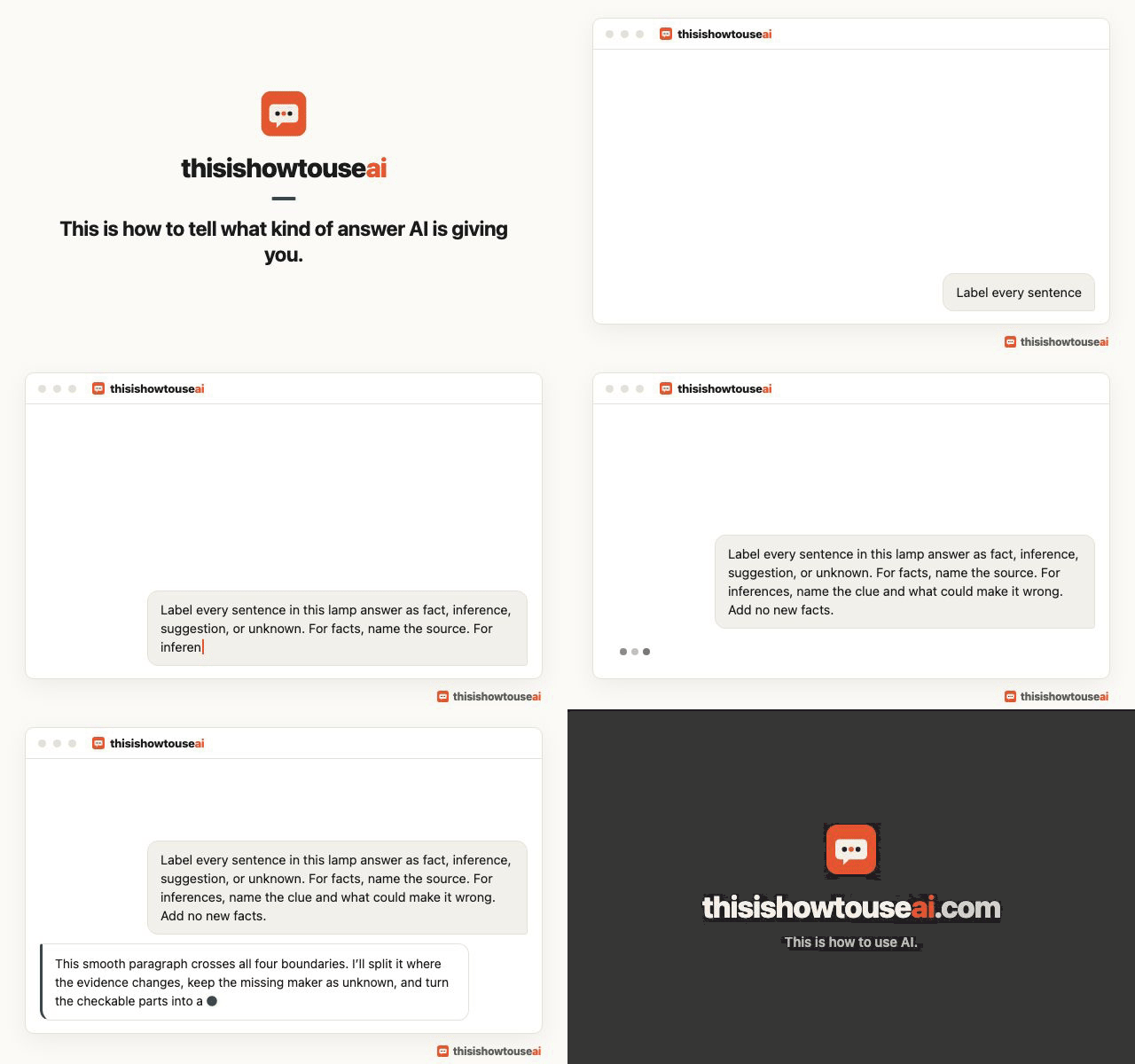
This is how to tell what kind of answer AI is giving you.
AI rarely announces when it moves from something checkable to something inferred. One smooth paragraph can contain an official fact, a reasonable guess, a personal suggestion, and a hole it quietly wrote around. The tone stays the same, so the seams disappear.
Four labels change the way you read
- Fact. A claim that can be checked outside the answer: a price, date, measurement, quotation, rule, product specification, or what a document says. A fact-shaped sentence can still be wrong or stale.
- Inference. A conclusion drawn from clues: the seat may feel firm, the crowd will probably be lighter, the stain looks recent. It can be useful without being proven.
- Suggestion. A proposed action shaped by goals and preferences: choose the morning slot, ask the seller, spend the extra money. This is advice, not evidence.
- Unknown. A missing fact the available input cannot settle: whether an entrance is open today, what caused the damage, how another person will respond. A good answer leaves it open.
The labels do not rank sentences from good to bad. They tell you what kind of work each sentence can honestly do.
Make the seams visible
Use a harmless excerpt or a fictional answer while learning the move. Do not paste a private conversation or sensitive record just to classify it.
The labeling prompt:
Label each sentence in the answer below as fact, inference, suggestion, or unknown. A sentence can have more than one label, so split it when needed. For every fact, name the responsible source that could confirm it. For every inference, name the clue it rests on and what could make it wrong. Turn every unknown into a question. Do not add new facts.
Use the answer already in your harmless chat. The four labels and the no-new-facts boundary are the part that matters.
What this looks like in one sentence
Take this fictional line: “The public listing says the lamp is brass, the wear suggests it may be older, and you should offer $45, although the maker is unclear.”
- Fact-shaped claim: the listing says brass. Check the actual listing; the sentence only reports what a seller wrote.
- Inference: wear may suggest age. Wear can have other causes, so the clue does not prove the conclusion.
- Suggestion: offer $45. That depends on your budget, current comparable sales, condition, and risk tolerance.
- Unknown: the maker. More photos or markings may narrow it, but the current input does not settle it.
Nothing about the original sentence’s confidence told you those categories. The labels do.
What to do with each kind
Check facts that carry a consequence. Stress an inference by asking what else could explain the clues. Treat suggestions as options whose values belong to you. Preserve unknowns as questions until a real source, person, or observation can answer them.
The goal is not suspicion of every sentence. It is accurate trust: facts checked, inferences held lightly, suggestions chosen deliberately, and unknowns allowed to remain unknown.
- Share only: A fictional or harmless answer excerpt; summarize sensitive situations yourself instead of pasting private messages, records, contracts, or confidential work.
- Verify: Every consequential fact and inference against the original document, current first-party source, direct observation, or accountable person before acting.
This is how to use AI.