
This is how to tell what AI can and cannot see in an image
An image can support observations, suggest possibilities, and leave important facts unknowable. Ask AI to keep those categories separate.
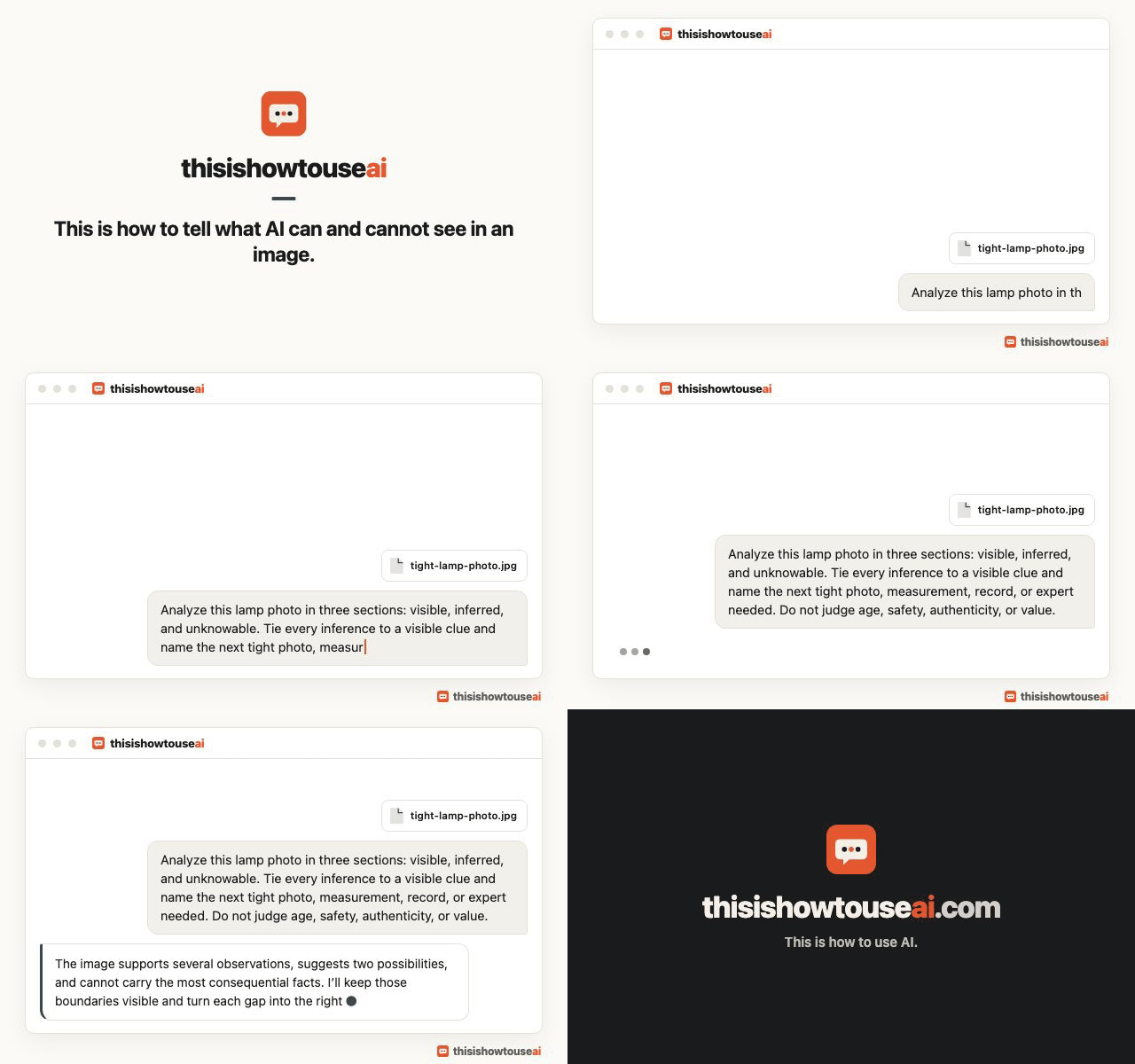
This is how to tell what AI can and cannot see in an image.
A photo of a thrift-store lamp shows a green shade, a brass-colored base, a cloth-covered cord, and a small maker’s mark that is too soft to read. An AI answer can describe those pixels and still slide into claims about age, material, safety, and value that the image never established.
Use three honest buckets
- Visible: evidence the pixels directly support, such as color, shape, count, relative position, and readable text. Even visible text can be misread.
- Inferred: a plausible interpretation of visible clues, such as a brass-colored finish possibly being metal or a worn surface possibly being older.
- Unknowable from this image: facts that require another view, touch, measurement, records, or expertise, such as electrical safety, authenticity, ownership history, or fair value.
The buckets matter because the same confident sentence can cross all three without changing tone.
Make the boundary visible
For practice, place an ordinary object on a neutral surface and take one tight photo. Keep rooms, people, mail, labels, serial numbers, screens, and reflections out of frame.
The image-boundary prompt:
Analyze this tight photo of an ordinary table lamp using three sections: visible, inferred, and unknowable from this image.
For every inferred detail, name the exact visible clue and at least one other explanation. For every unknowable detail, tell me whether a different tight photo, a measurement, a label, a record, or an expert could resolve it. Do not identify the maker, date, material, safety, authenticity, or value unless the image directly proves it.
Swap in a tight photo of an ordinary object. The visible, inferred, and unknowable split is the part that matters.
Ask for the next capture, not more confidence
If the maker’s mark matters, ask which angle and lighting would make it readable. If material matters, ask what close-up or non-destructive observation could distinguish paint from plated metal. If safety matters, stop. A photo and a chatbot do not replace an inspection by someone qualified to assess the object.
Image tools are powerful because they turn the world into input. That makes capture discipline part of AI literacy: frame narrowly, inspect before upload, and never let a plausible label outrun what the pixels can carry.
- Share only: A new tight photo of an ordinary object on a neutral surface, with people, rooms, labels, serial numbers, mail, screens, and reflections excluded.
- Verify: Identity, material, age, authenticity, condition, value, function, and safety through direct inspection, labels, records, responsible sources, or qualified help.
This is how to use AI.