
This is why the same AI question can get different answers
Two answers to the same question can differ without either difference proving truth or failure. Compare what stayed stable, what varied, and what needs evidence.
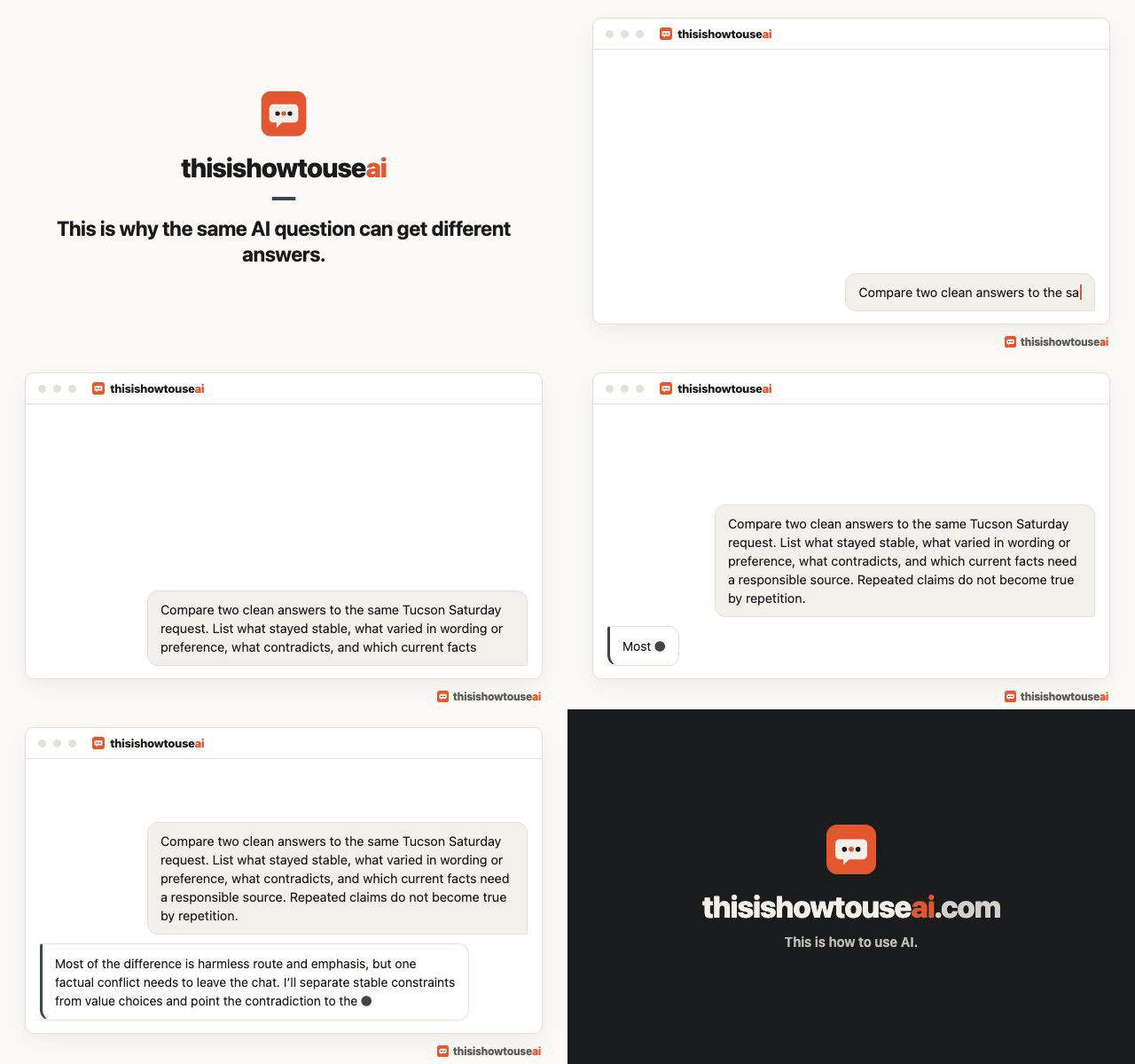
This is why the same AI question can get different answers.
Ask for a quiet Saturday plan twice and one answer starts with a museum while the other starts with a long walk. That variation can feel like one answer must be broken. More often, the request allowed several plausible paths and the system produced different language and emphasis within that space.
Variation is not the same as contradiction
Some differences are surface variation: wording, order, examples, and tone. Some are value differences: one answer prioritizes convenience while another prioritizes novelty. Some are factual contradictions: different hours, rules, prices, or product claims. Only the last kind can be resolved by evidence rather than preference.
Compare two clean runs
The variation prompt:
Run this harmless request twice in clean chats:
Plan a low-key Saturday in Tucson for one adult with a $90 daytime budget. Include one museum, one outdoor stop, a quiet lunch, and no more than 45 minutes of driving total. Ask one question if a missing preference would materially change the plan. Treat hours, prices, closures, reservations, and weather as facts to verify.
After both answers exist, compare them. List what stayed stable, what varied in wording or preference, what directly contradicts, and which current facts need a responsible source. Do not call repeated claims true merely because both answers used them.
Swap in your own harmless request. Identical constraints and a clean comparison are the part that matters.
Stabilize what matters
If a constraint disappears between runs, strengthen the prompt: “Use every constraint and show where each one affected the plan.” If the order varies but both routes fit, the difference may not matter. If one answer says a museum is open and the other says it is closed, stop comparing prose and check the museum’s current source.
You can also ask for a decision rule instead of a single answer: “If quiet matters most, prefer this shape; if outdoor time matters most, prefer that one.” Decision rules make acceptable variation easier to use.
Consistency is not truth
The same wrong claim can repeat, and a true explanation can be worded differently. Repetition may show that an answer is stable under the prompt. It does not show that the world agrees.
The useful habit is to preserve the constraints that matter, tolerate harmless variation, and route factual disagreement to evidence.
- Share only: A fictional or harmless question and its non-sensitive constraints; keep private conversation history and sensitive records outside repeated experiments.
- Verify: Any factual claim that affects the decision against current first-party sources or original evidence, regardless of how consistently it appears across answers.
This is how to use AI.